
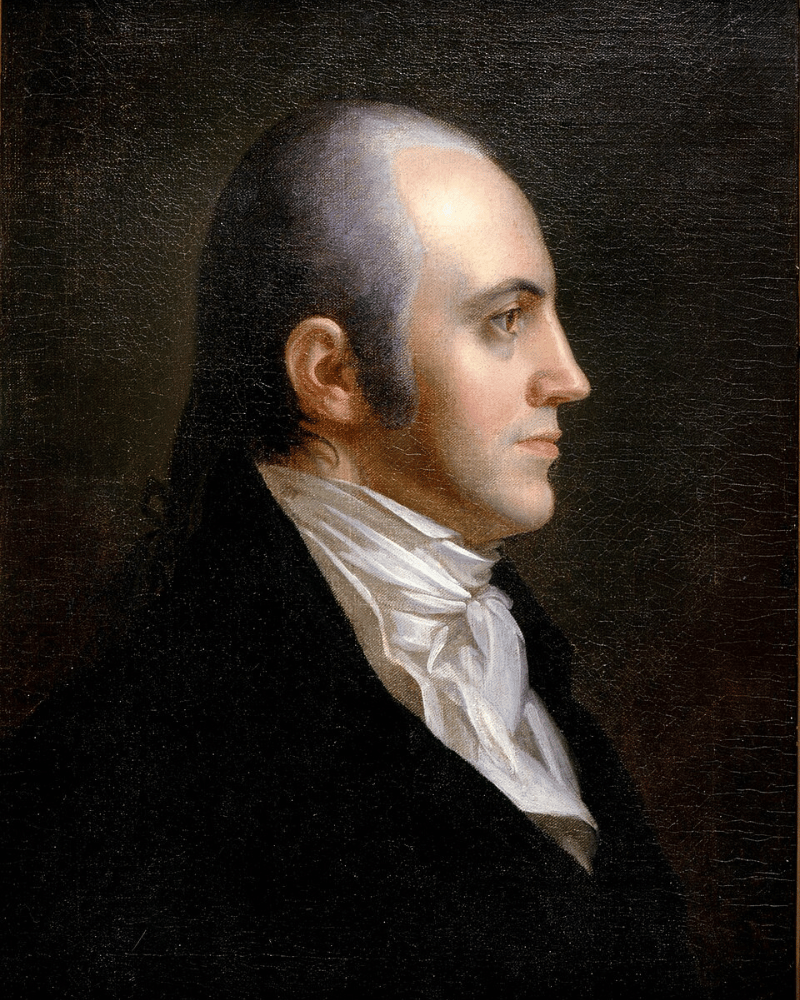
Aaron Burr Historic Sites To Visit
Aaron Burr is one of the most fascinating — and controversial — figures in early American history.
A Revolutionary War officer, New York politician, U.S. Senator, and Vice President under Thomas Jefferson, Burr’s life was filled with ambition, political drama, personal tragedy, and one of the most infamous moments in American history: the duel that killed Alexander Hamilton.
But Burr’s story is bigger than one duel. His life connects travelers to Revolutionary War sites, early American political landmarks, historic homes, cemeteries, and places that reveal the complicated world of the Founding Era.
From New Jersey and New York to Washington, D.C., and beyond, these Aaron Burr historic sites help visitors follow the life of a man who stood near the center of America’s founding — and then became one of its most debated figures.
Why Visit Aaron Burr Historic Sites?
Aaron Burr’s story takes you straight into the tension, ambition, and uncertainty of the early United States.
He was born into a prominent colonial family, fought in the Revolutionary War, became one of the most powerful politicians in New York, served as vice president, and then saw his reputation collapse after Alexander Hamilton’s death.
Visiting places connected to Burr offers a closer look at the personal rivalries, political battles, and fragile beginnings of the American republic.
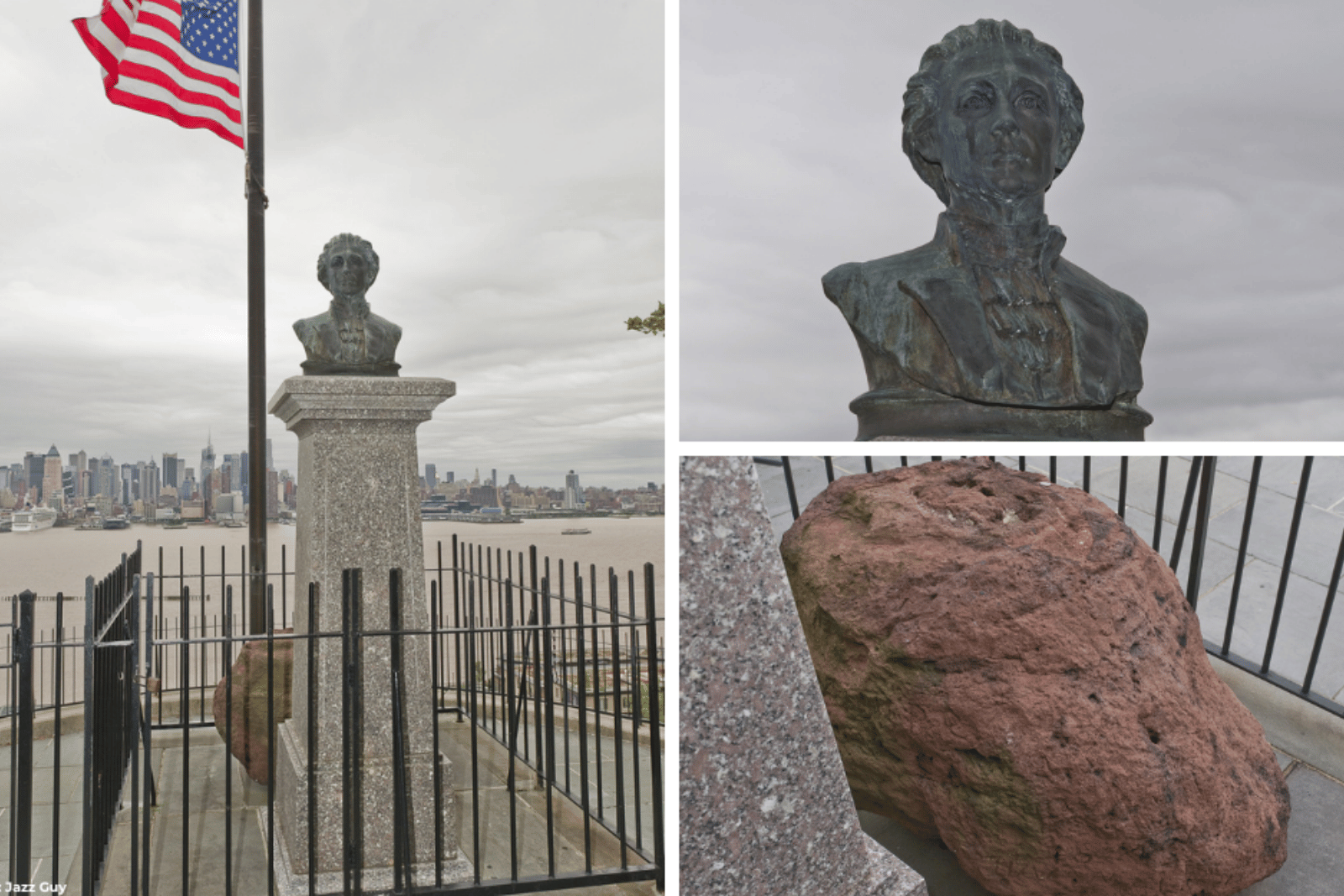
Weehawken Dueling Grounds
Weehawken Township, New Jersey
Visit the New Jersey cliffs above the Hudson River, where Aaron Burr’s fatal duel with Alexander Hamilton became one of the most dramatic moments in early American history.
Explore the Weehawken Dueling Grounds and the story behind the Burr-Hamilton duel.
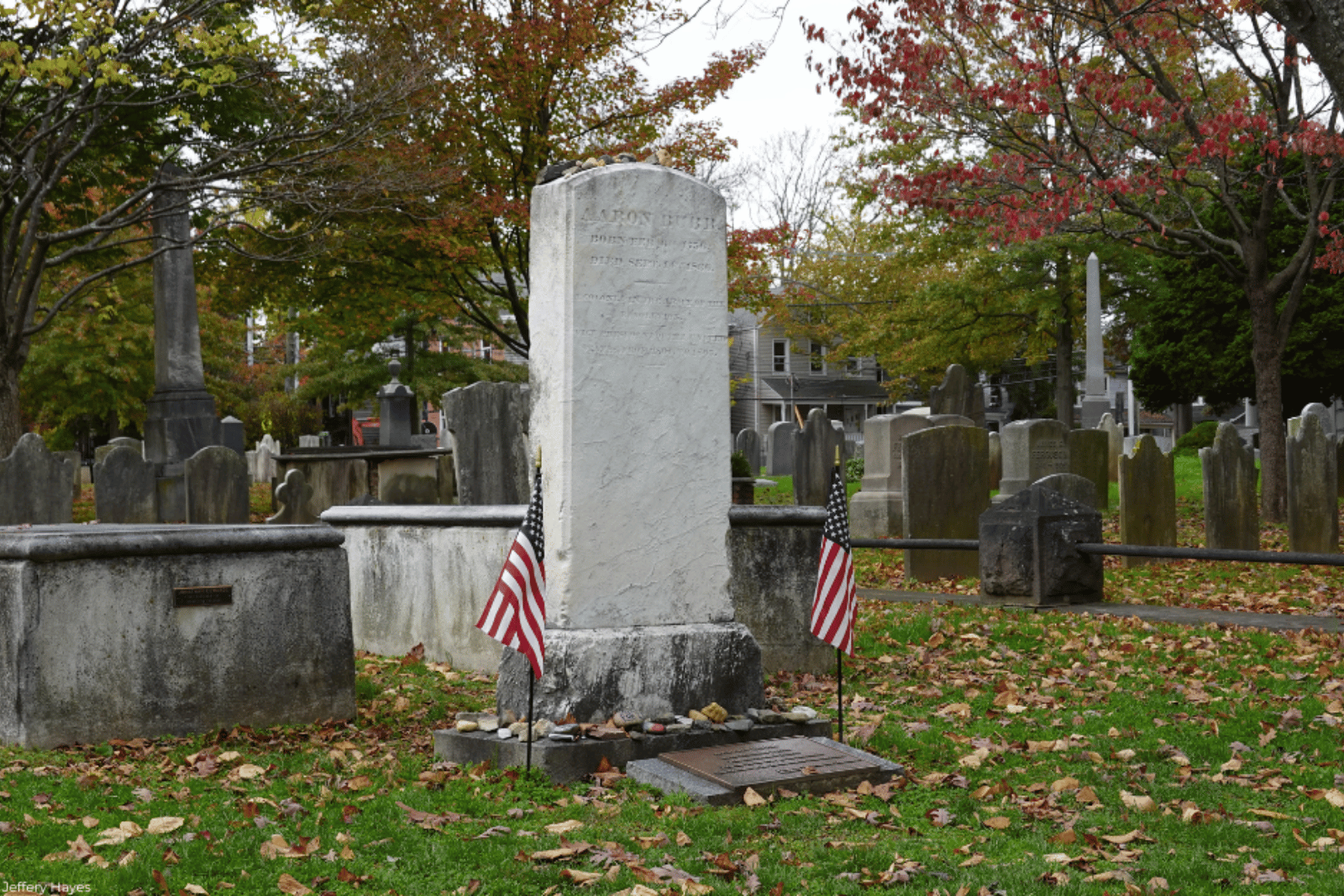
Aaron Burr’s Grave
Princeton, New Jersey
Visit Aaron Burr’s grave in Princeton Cemetery, where the controversial figure lies among the family and college community that shaped his early life.
See Aaron Burr’s grave and explore his Princeton connection.

Colburn House State Historic Site
Pittston, Maine
Visit the Colburn House to stand where a young Aaron Burr stopped during the grueling 1775 expedition to Quebec.
Read more about the Colburn House State Historic Site.
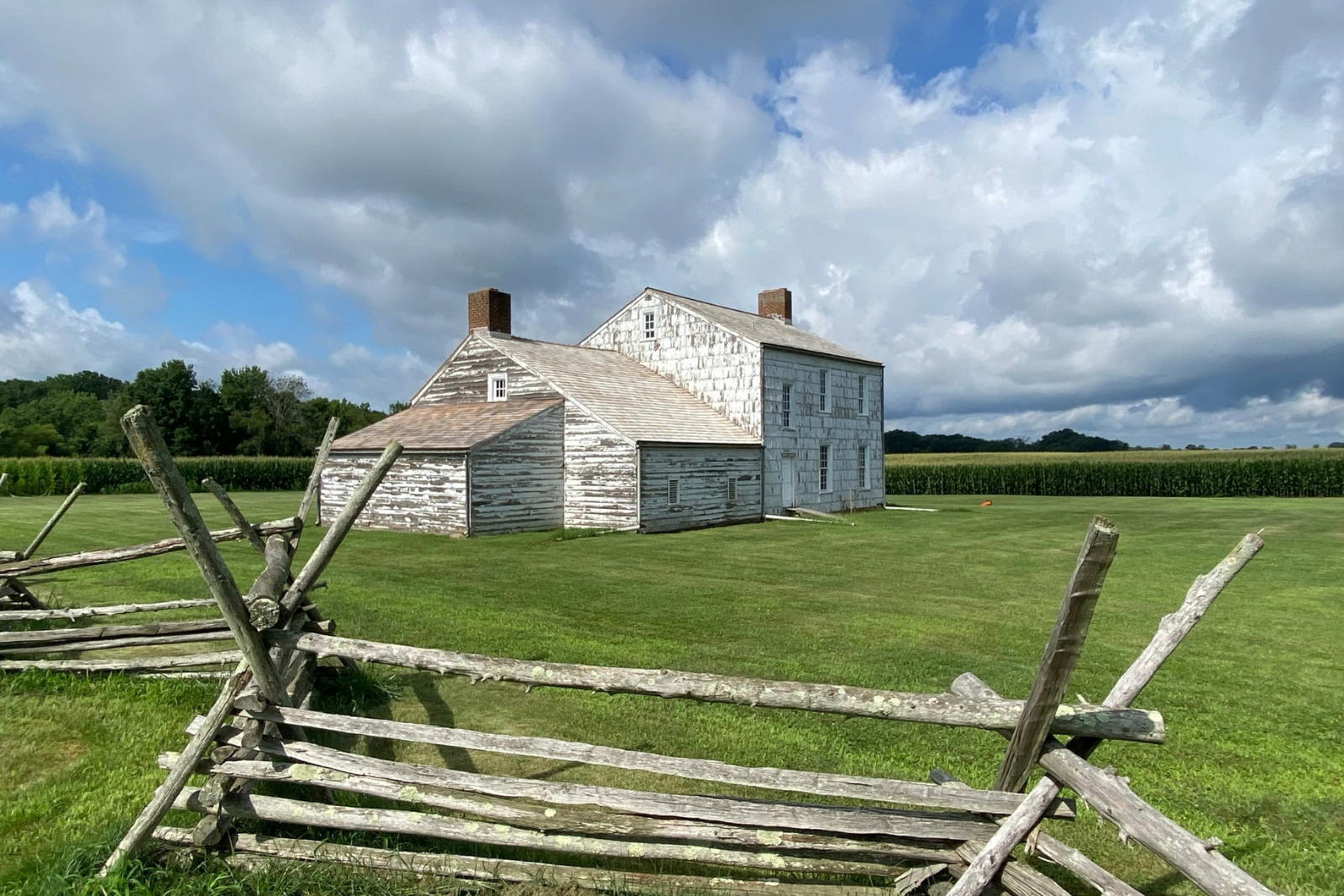
Monmouth Battlefield State Park
Manalapan Township, New Jersey
Aaron Burr commanded a regiment at the Battle of Monmouth on June 28, 1778.
Read more about the Battle of Monmouth.
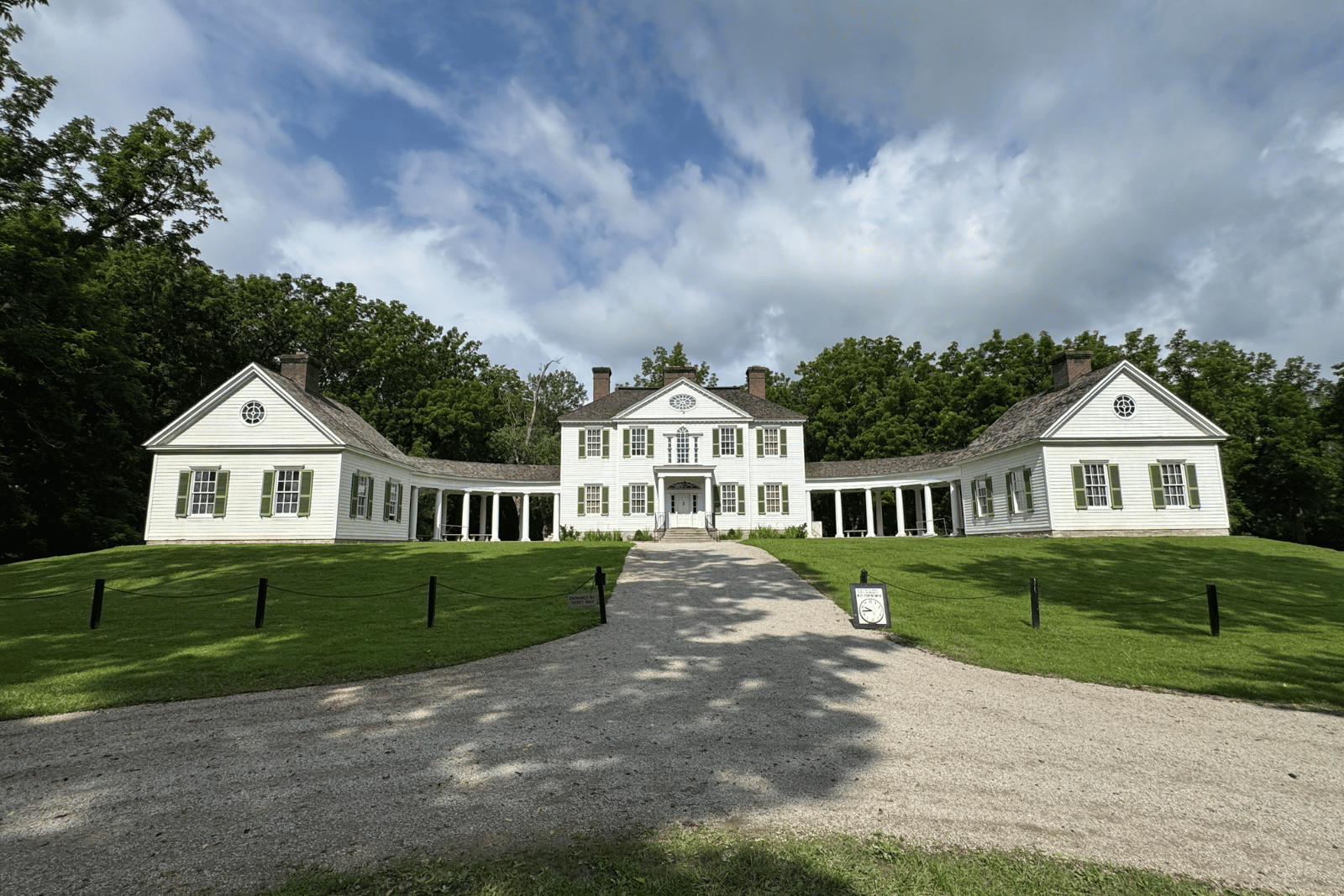
Blennerhassett Island Historical State Park
Parkersburg, West Virginia
Blennerhassett Island Historical State Park preserves the elegant island estate where Aaron Burr’s mysterious western expedition took shape, helping turn the peaceful Ohio River island into one of the most intriguing stops tied to Burr’s controversial legacy.
Read more about Blennerhassett Island.

U.S. Capitol
Washington, D.C.
As vice president under Thomas Jefferson, Burr presided over the U.S. Senate. The Capitol gives his national political career a physical travel connection, even though it is not exclusively a Burr site.
Read more about touring the U.S. Capitol.
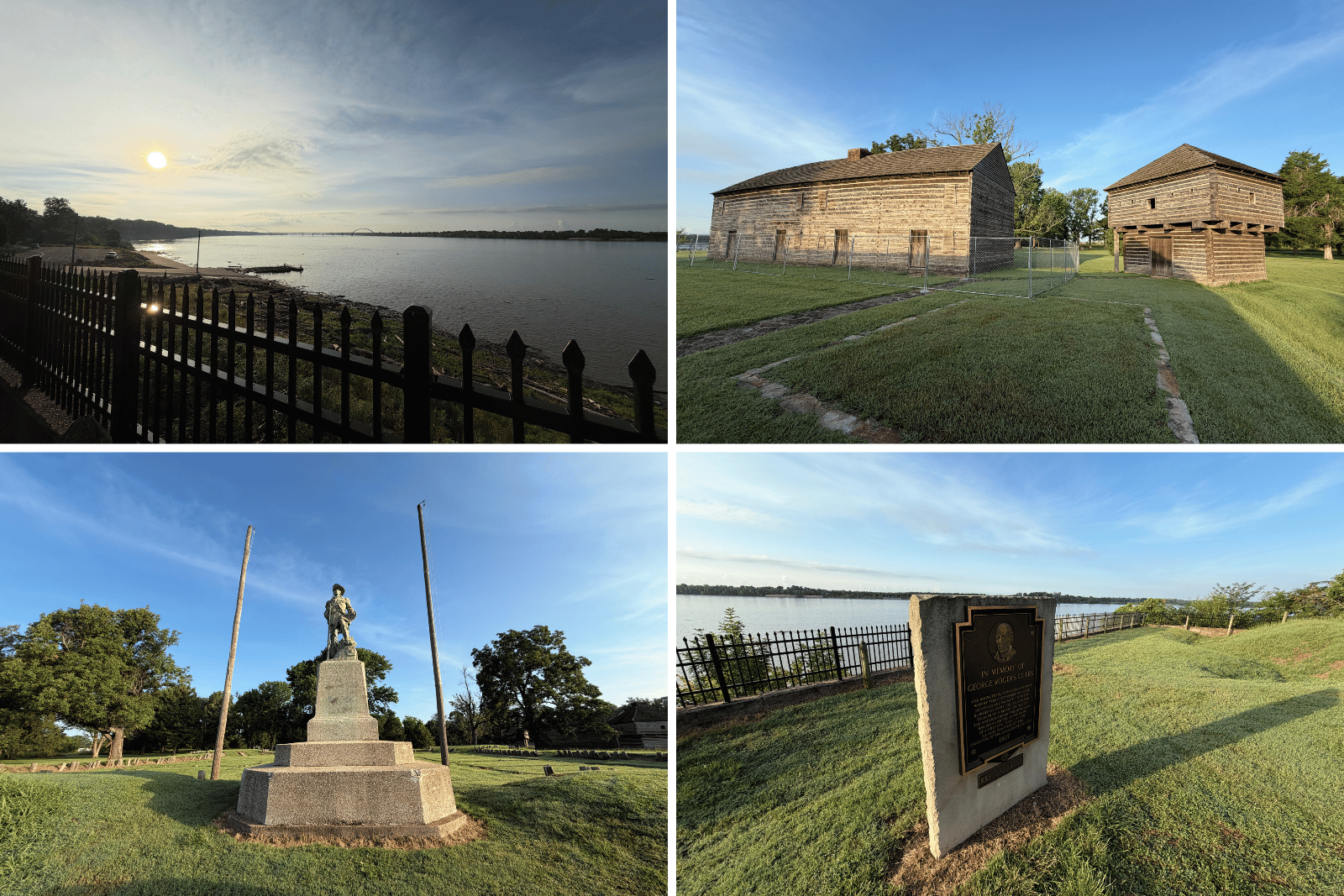
Fort Massac State Park
Metropolis, Illinois
In 1805, Aaron Burr met General James Wilkinson at Fort Massac along the Ohio River, a meeting linked to Burr’s controversial plans for western expansion and the alleged conspiracy to separate western territories from the United States. Today, visitors can explore the historic fort site and learn about its role in early American history.
Read more about visiting Fort Massac State Park.
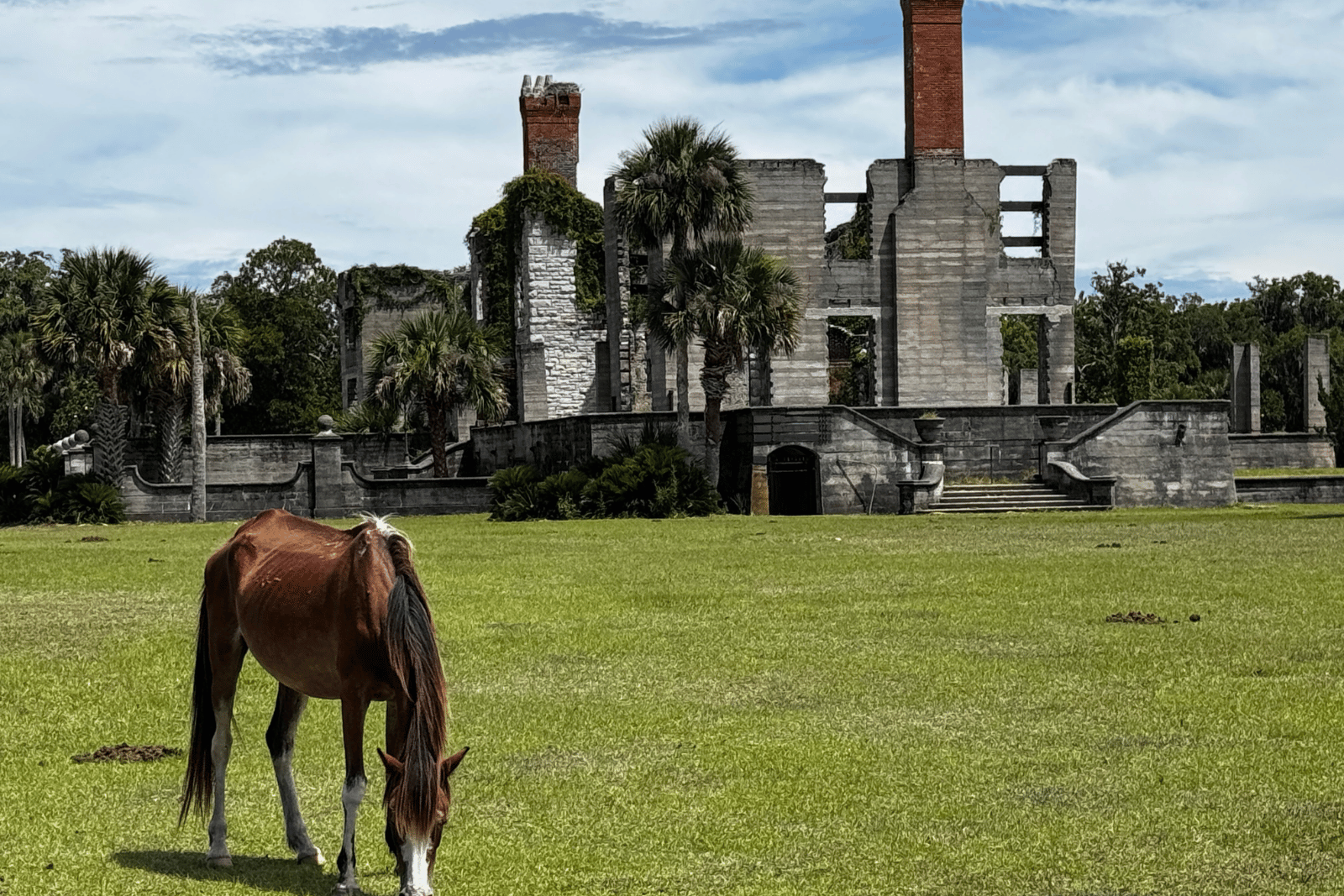
Dungeness Historic District – Cumberland Island
St. Marys, Georgia
After his infamous 1804 duel with Alexander Hamilton, Aaron Burr traveled to Cumberland Island, where he attempted to visit Catharine Greene, widow of Revolutionary War General Nathanael Greene, at her Dungeness estate. According to historical accounts, Greene avoided meeting Burr because of her friendship with Hamilton. Today, visitors can explore the atmospheric ruins of the later Dungeness mansion and the surrounding historic grounds.
Read more about visiting Cumberland Island National Seashore.
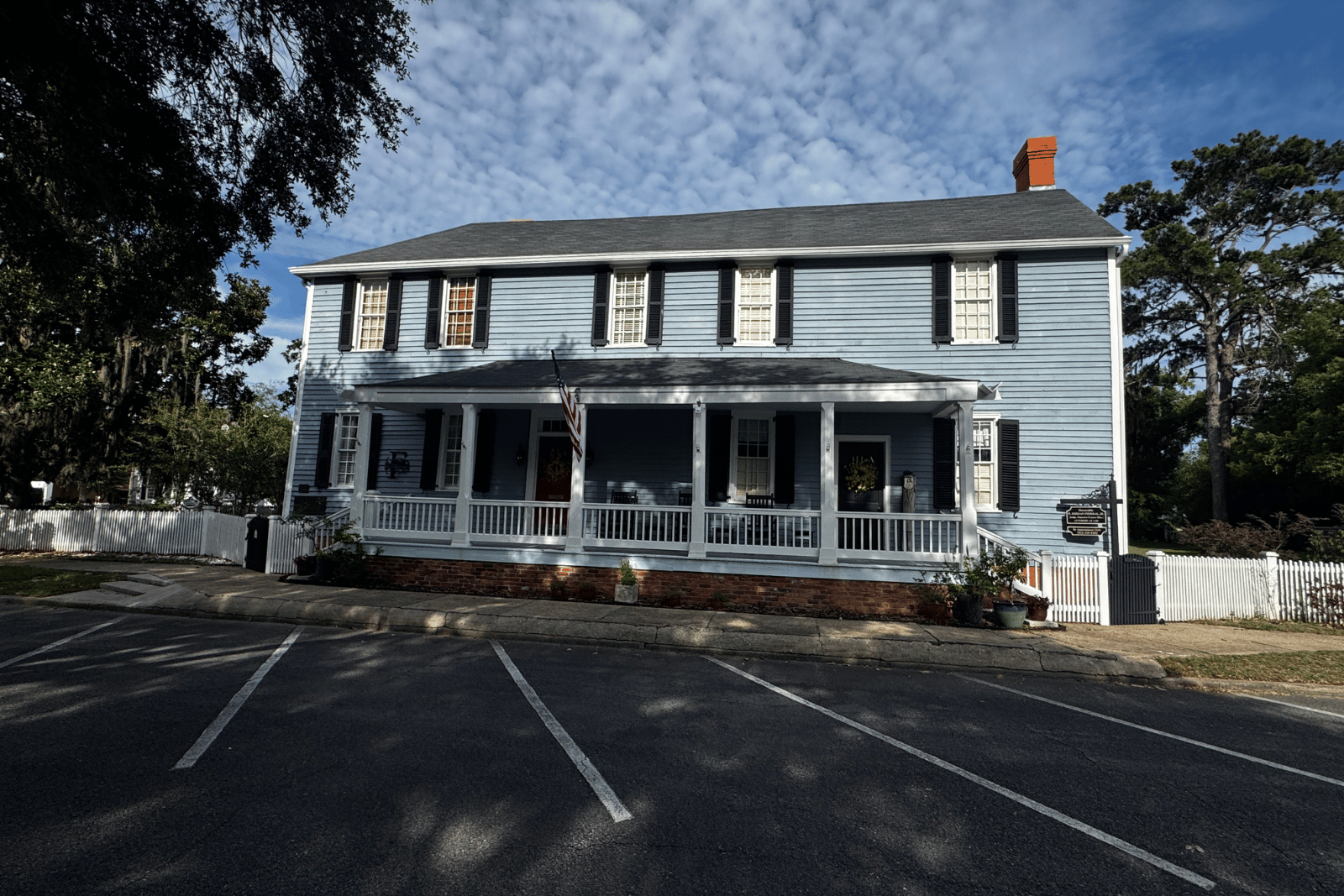
Archibald Clark House
St. Marys, Georgia
Following his infamous 1804 duel with Alexander Hamilton, Aaron Burr reportedly sought refuge at the home of his friend Archibald Clark in St. Marys, Georgia. The house, one of the oldest surviving residences in the city, still stands today, offering visitors a connection to Burr’s dramatic flight from public disgrace.
Read more about the Archibald Clark House and St. Marys Historic District.
Other Historic Sites Associated with Aaron Burr
One if by Land, Two if by Sea. New York City
This restaurant is associated with Aaron Burr’s former carriage house from Richmond Hill, giving you a surviving Burr connection in Manhattan.
Aaron Burr House, Pennsylvania
The Aaron Burr House in New Hope, Pennsylvania, is said to be where Burr fled after the deadly duel with Alexander Hamilton.
Aaron Burr House, Kinderhook, New York
Visit the Aaron Burr House in Kinderhook, where Burr spent part of his later life after returning to New York following years of political controversy.