

Benedict Arnold Historic Sites
Benedict Arnold remains one of the most complicated figures of the American Revolution—a battlefield hero whose name later became synonymous with treason. Born in Norwich, Connecticut, in 1741, Arnold emerged as one of the Continental Army’s most aggressive commanders. He helped capture Fort Ticonderoga, led the grueling expedition toward Quebec, helped relieve Fort Stanwix, and played a decisive role in the American victory at Saratoga, where he was badly wounded.
By 1780, however, Arnold had secretly agreed to betray the American cause and surrender West Point to the British. The plot collapsed after British Major John André was captured carrying evidence of the conspiracy, and Arnold escaped to British-held New York.
Now serving Britain, he later led destructive raids in Virginia and against New London and Groton, Connecticut. Today, historic sites across the Northeast trace both sides of Arnold’s extraordinary story—from celebrated Revolutionary commander to America’s most infamous traitor
Explore Benedict Arnold Historic Sites
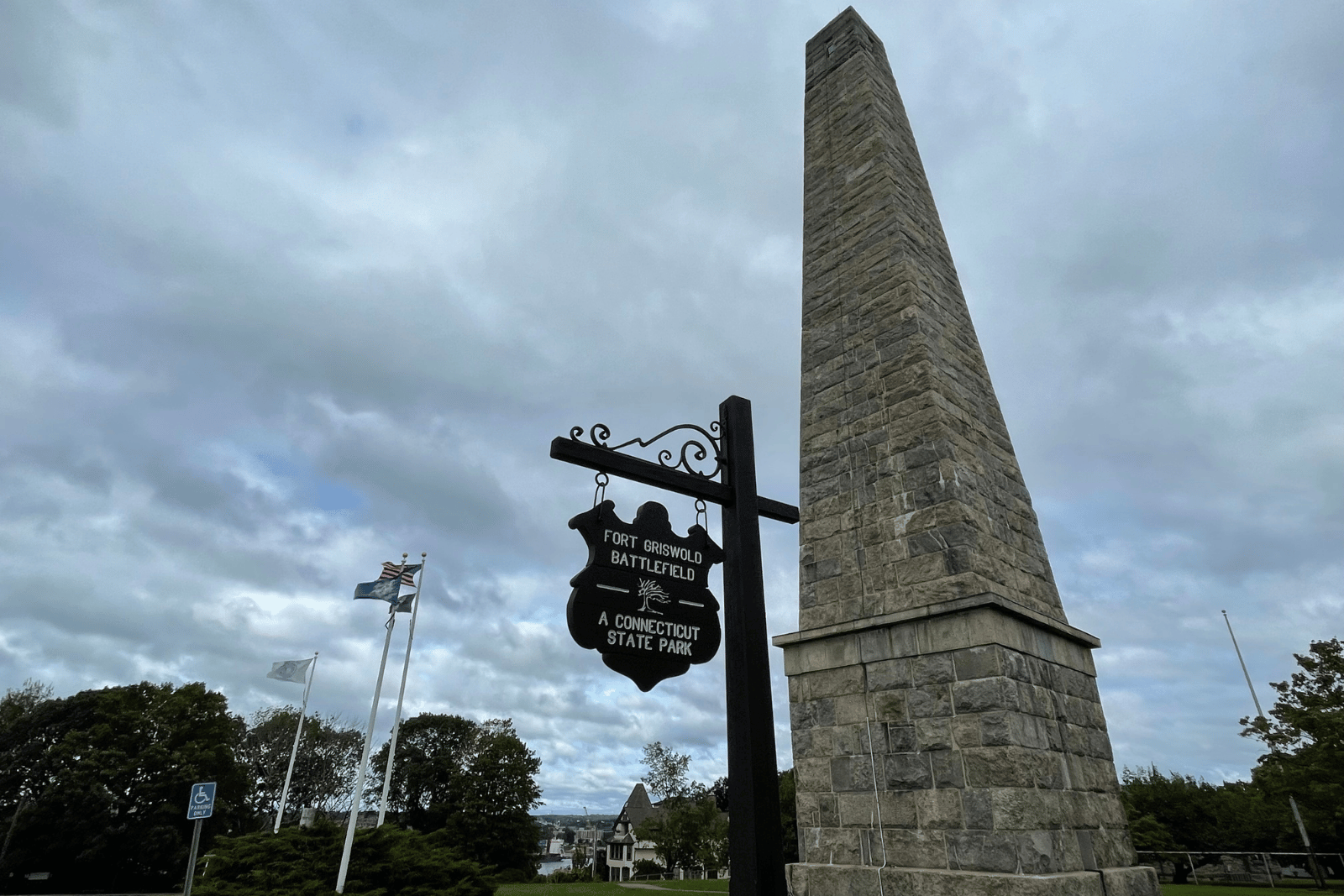
Fort Griswold Battlefield State Park
Groton, Connecticut
Fort Griswold was attacked during the 1781 British raid on New London and Groton commanded by Benedict Arnold after he changed sides.
Read more about Fort Griswold.

Colburn House State Historic Site
Pittston, Maine
Reuben Colburn’s home became a headquarters and staging point for Benedict Arnold’s difficult 1775 expedition through Maine toward Quebec.
Read more about the Colburn House.

Saratoga National Historical Park & Boot Monument
Stillwater, New York
Arnold helped lead American forces to victory at Saratoga and was wounded near the site now marked by the Boot Monument, which famously honors him without naming him.
Read more about Boot Monument.

Fort Stanwix National Monument
Rome, New York
Benedict Arnold led an American relief force toward Fort Stanwix during the 1777 campaign that helped derail the British advance through New York.
Read more about Fort Stanwix.
More Places Connected to Benedict Arnold
Benedict Arnold’s Birthplace
Norwich, Connecticut
A marker in Norwich identifies the site where Benedict Arnold was born in 1741, before he became both a celebrated Revolutionary War commander and America’s most infamous traitor.
Read more about Benedict Arnold’s Birthplace.
Fort Ticonderoga
Ticonderoga, New York
Benedict Arnold joined Ethan Allen and the Green Mountain Boys in the 1775 capture of Fort Ticonderoga, one of the Revolution’s earliest American victories.
Read more about Fort Ticonderoga.
Major John André Monument
Tappan, New York
The monument marks the execution site of British Major John André, whose capture exposed Benedict Arnold’s plot to surrender West Point.
Read more about André Monument.
Westover Plantation
Charles City, Virginia
Benedict Arnold landed his British force at Westover Plantation in January 1781, using it as a base before marching on and raiding Richmond.
Read more about Westover Plantation.