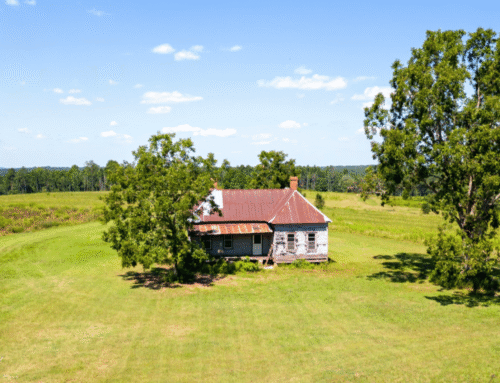

Lost World Caverns in Lewisburg: Exploring One of West Virginia’s Best Caves
Just outside the charming mountain town of Lewisburg, a path leads down into a completely different world—hidden deep beneath the mountains of West Virginia.
Step through the entrance and follow the paved path down into a hidden world of towering stalactites, massive flowstone formations, and cathedral-sized chambers carved by water over millions of years. It’s the kind of place that quickly reminds you West Virginia isn’t just “Wild and Wonderful” above ground—there’s an incredible world waiting beneath it too.
My wife and I visited with a couple of friends early in the morning, late in spring. We pulled into the parking lot before they opened, hoping to catch the first tour.
Unlike many cave tours, Lost World Caverns is largely self-guided, which means you can wander at your own pace through the enormous chambers.
After getting our tickets, we waited about 20 minutes before heading underground. The visitor center is worth checking out while you wait. It’s packed with fossils, including the bones of the oldest black bear ever found in West Virginia, estimated to be more than 32,000 years old.
The Natural History of the Cave
Interpretive panels throughout the visitor center explain both the history and natural story behind the caverns. The cave itself was discovered in 1942 when a local farmer noticed cold air flowing from a small hole in the ground. Curious, he investigated the opening and eventually uncovered what turned out to be one of the largest accessible caverns in the Mountain State.
While the discovery was fairly recent, the cave itself is incredibly old. Lost World Caverns formed over millions of years as slightly acidic groundwater slowly dissolved the surrounding limestone. The formations you see today grew drop by drop as mineral-rich water left behind tiny deposits over time.
Some of those formations are estimated to be hundreds of thousands of years old, making the cave not just impressive, but ancient.
Exploring Lost World Caverns
When our time came, our group of four was the only group signed up for our time. You descend into the cave through doors in the visitor center.
Immediately heading down the wide paved path, you could feel the temperature drop and the humidity rising off the damp ground. The cave stays 52 degrees year-round, so you might want to bring a light jacket.
This massive cavern stretches nearly a thousand feet long and rises more than 100 feet high in places. Everywhere you look, the ceiling drips with stalactites while stalagmites grow slowly upward from the cave floor. Soft lighting highlights the formations and makes the entire cavern feel almost otherworldly.
The tour is a one-way half-mile loop that takes about 45 minutes to complete. Though we took way too many pictures and videos and spent a little bit longer. You are not being timed, so take as long as you like.
Along the way, there are many stunning named formations that are clearly labeled by signs. If you’ve been to many caves, you know this is not always the case, but very much appreciated.
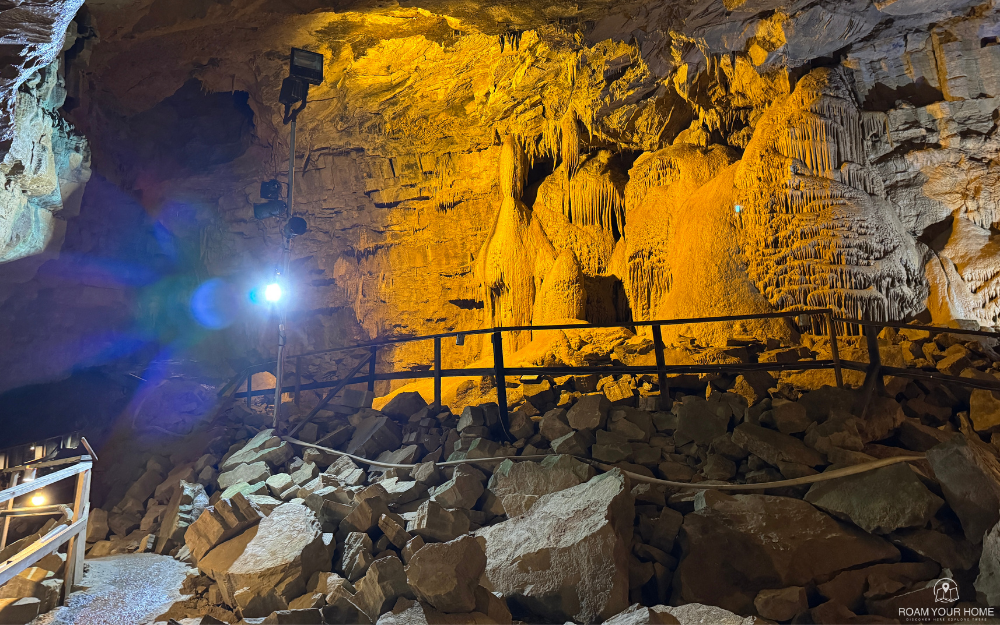
Hex Blocks
After the pathway down to the caverns, the first thing you come to is the Hex Blocks. The cavern’s floor is covered with these large, oddly shaped limestone blocks, which fell from the ceiling. They are believed to be 320 million years old. They do not block the path.
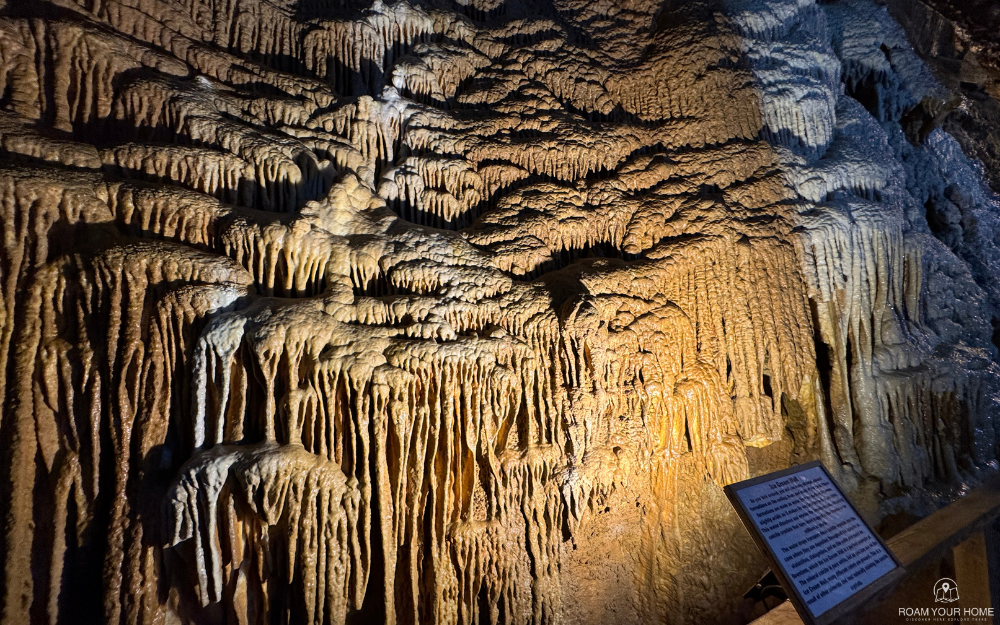
Ice Cream Wall
The Cream Wall is next on your write-a-little-bit-down-the-path. This large, beautiful flowstone formation takes up the entire wall. The Ice Cream wall, like the other stalactites and slagmites in the cave, is made of the mineral calcite, which in its pure form is a perfect white. As you can see above, the Ice Cream wall has many different colors. It’sbeen naturally stained by other minerals and mud.
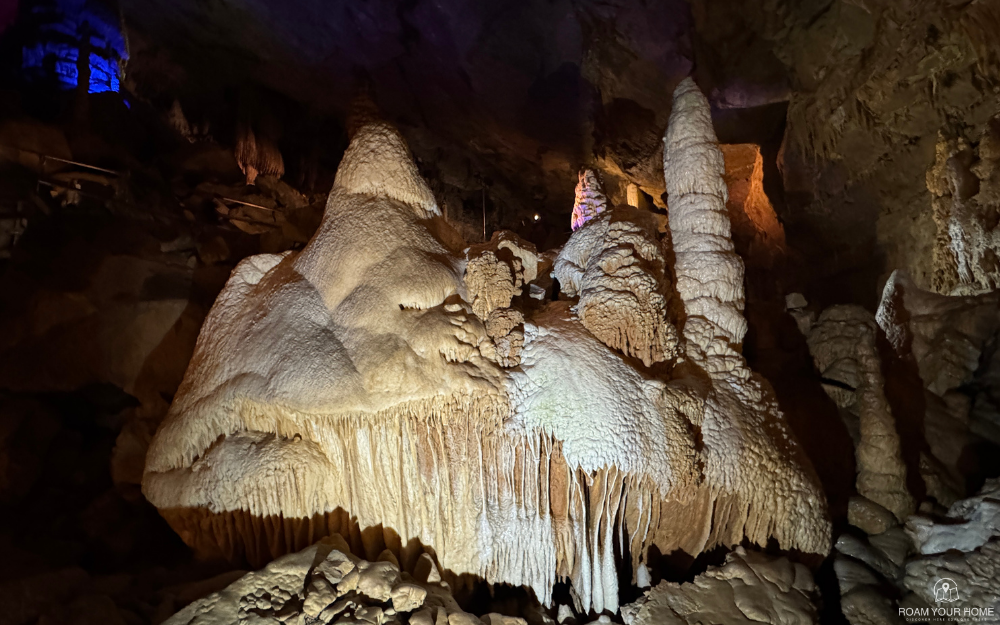
Smurf Village
The Smurf Village formation gets its name because it resembles the houses the Smurfs lived in. Looking at the picture above, we can totally see it. Can you? This large stalagmite is agreat example of pure white calcite.
The Castle
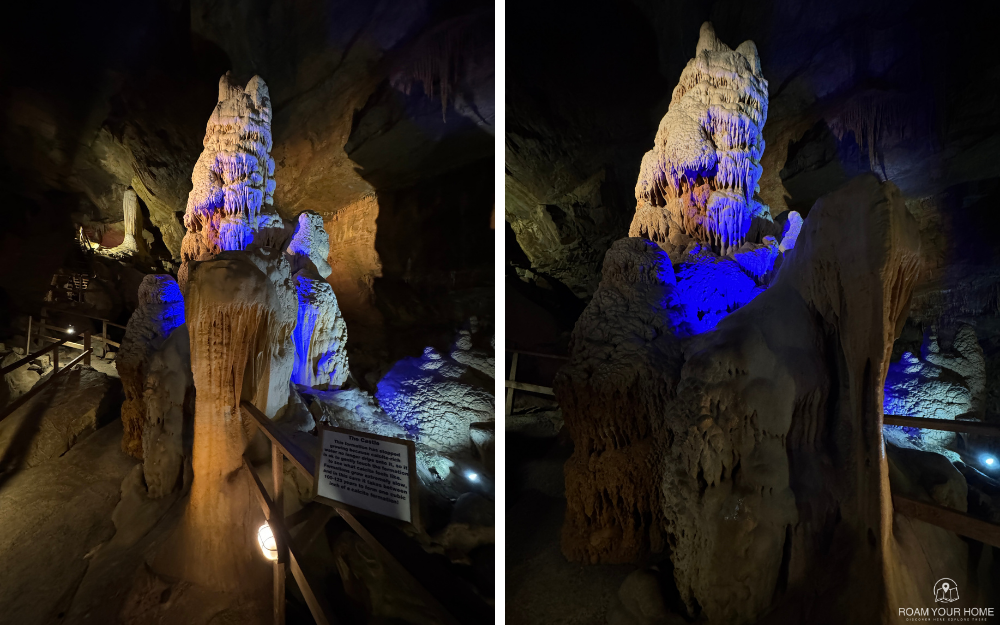
The Castle formation is next. This large stalagmite is no longer growing because water no longer drips onto it. Formations like this grow very slowly. It can take 100 to 125 years to grow an inch.
Because this one is done growing, the cave owners allow you to touch it. That said, don’t touch any other formations. The oils in our hands can damage the formations.
Bridal Veil
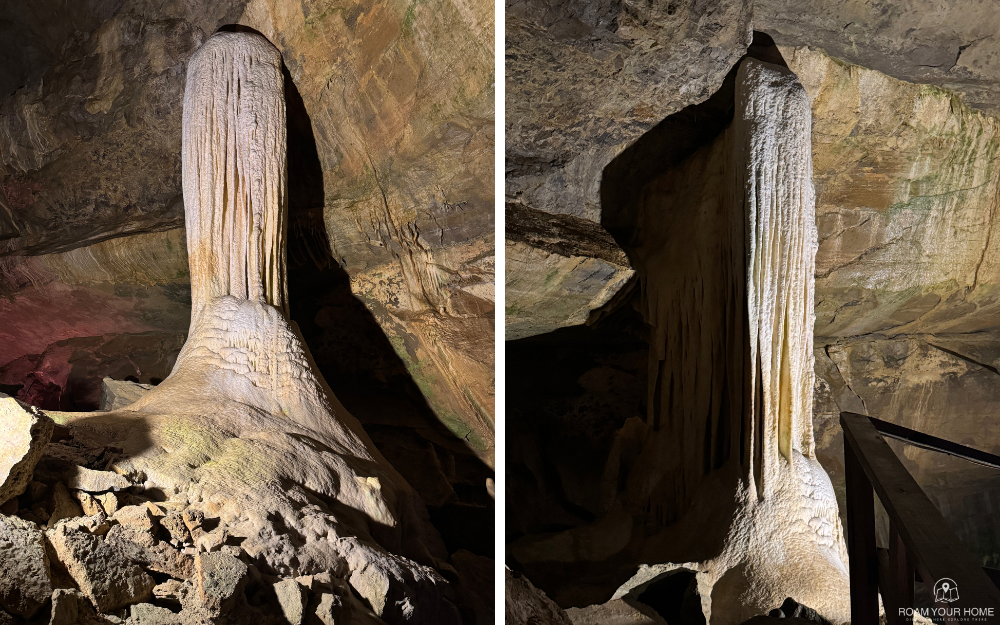
Continuing down the path, you come to one of the prettiest formations in the cave, Bridal Veil. It gets its name from its stunning, pure white color that resembles a bride’s veil. The formation is also a great example of a column, which forms when a stalactite and a stalagmite grow together.
Goliath
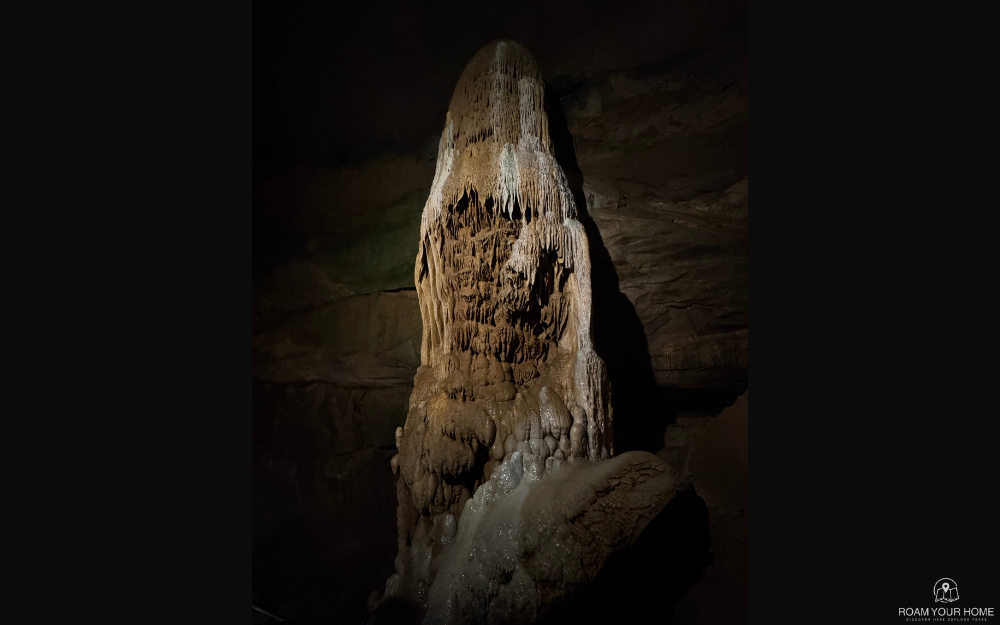
Goliath, the largest column in the caverns, is next. It stands 40 feet tall and 25 feet around. It’s thought to be 5 million years old. It’s quite pretty; you can clearly see the different colors of calcite.
Snowy Chandelier
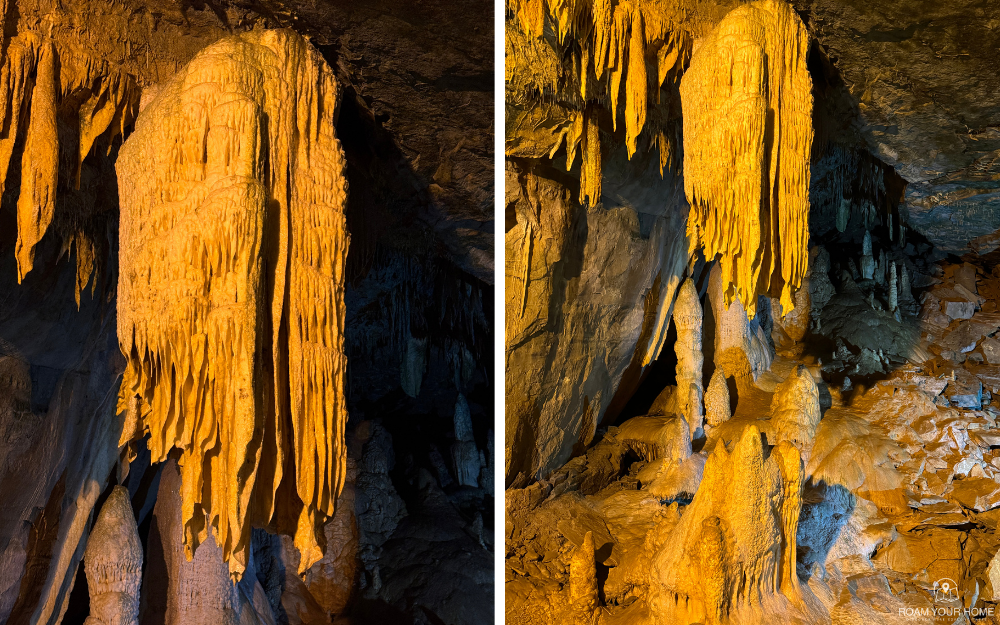
Probably the most famous formation inside the cave is the Snowy Chandelier, a dazzling white stalactite that looks like something hanging from the ceiling of an underground palace.
This massive formation is thought to weigh 30 tons. It’s the largest stalactite in the cave. It’s also still active, with every drop of water on the stalagmite below, the formation grows very slowly towards forming a column.
Listen closely while you are checking out the Snowy Chandelier. You hear water flowing. This is the Vanishing Stream. It disappears through a pile of rocks under the Snowy Chandelier. Where it goes is unknown until it resurfaces 8 miles away.
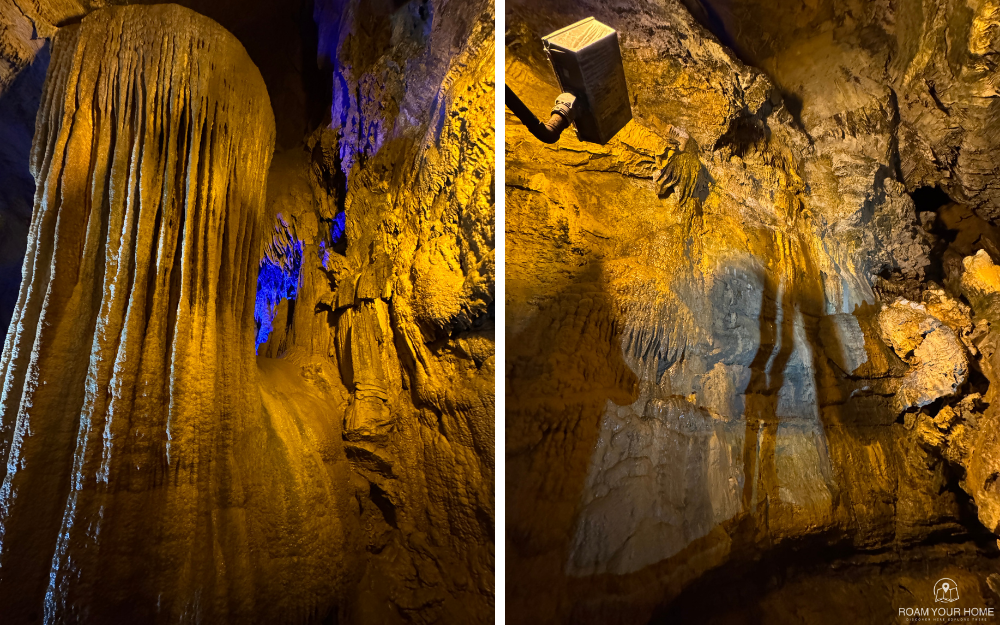
Crystal Waterfall and the Pigtail
The Crystal Waterfall and the Pigtail are next as you start looping back towards the entrance. After heavy rain, the Crystal Waterfall formation becomes active with waterfalls.
The Pigtail is a great place to see formations called curtains, draperies, and cave bacon, which gets its name because when light is shone on it looks like bacon.
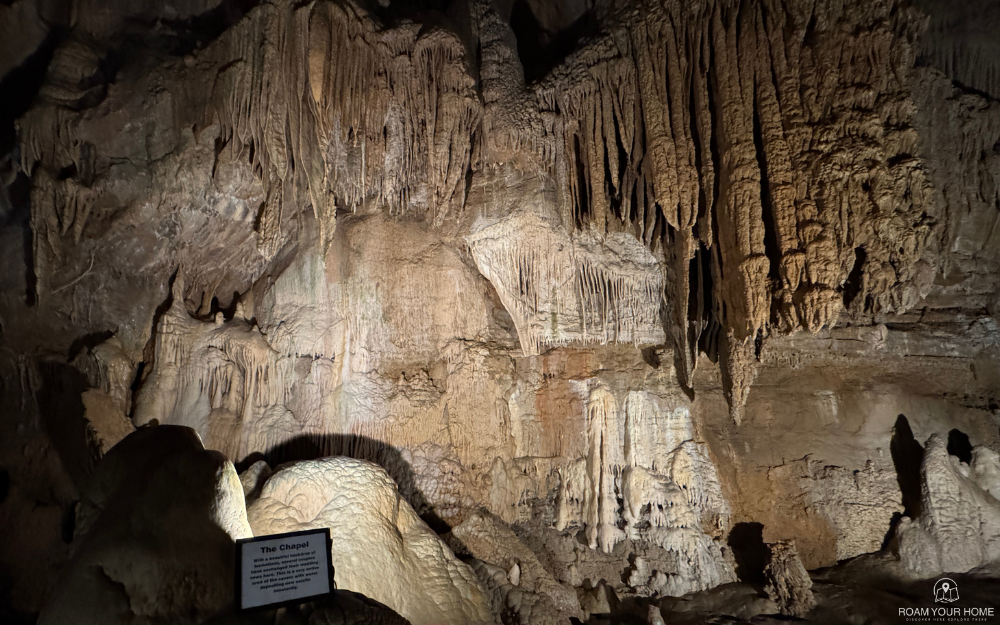
The Chapel
The Chapel is an area in the cave with a wide variety of stunning formations. It is very active with water dripping constantly. It gets its name because, as you probably could have guessed. Many people have exchanged wedding vows in front of it.
Natural Entrance
After the Chapel, you come to the Natural Entrance of Lost World Caverns. From here, take a second to look up. From here, you can see sunlight peaking in 12 stories above you. This was the only way in and out of the cave until the entrance tunnel was built.
From here, you can also see the remnants of an old cable ladder that used to get in and out of the cave. Look for the animal bones as well. Before it was a commercial cave, farmers would dump dead cows down the natural entrance, not knowing what it was, just that it took a long time to hit bottom.
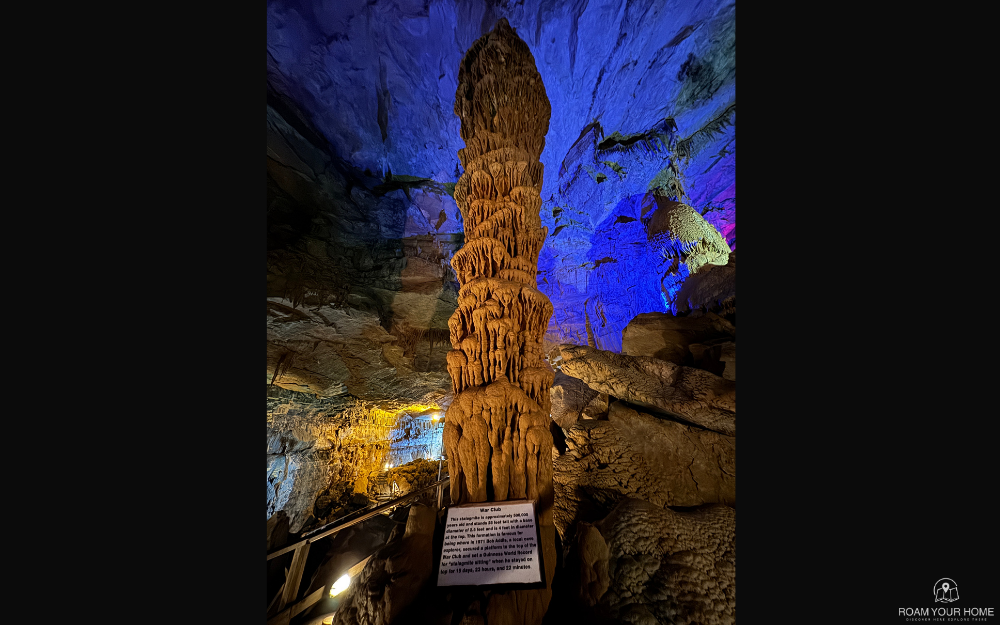
War Club
The last major formation before heading back up the entrance path is War Club. This enormous stalagmite is roughly 500,000 years old and 28 feet tall. Its diameter is 2.5 feet at the base and 4 feet at the top, making it resemble a war club.
The formation is very beautiful, but it’s most famous for a completely different reason. In 1971, a local cave explorer set a Guinness World Record for “stalagmite sitting.” He stayed there on the top of the formation for 15 days, 23 hours, and 22 minutes. It’s not clear whether this is an “official” Guinness World Records entry, but regardless, I think it’s safe to say it hasn't been broken.
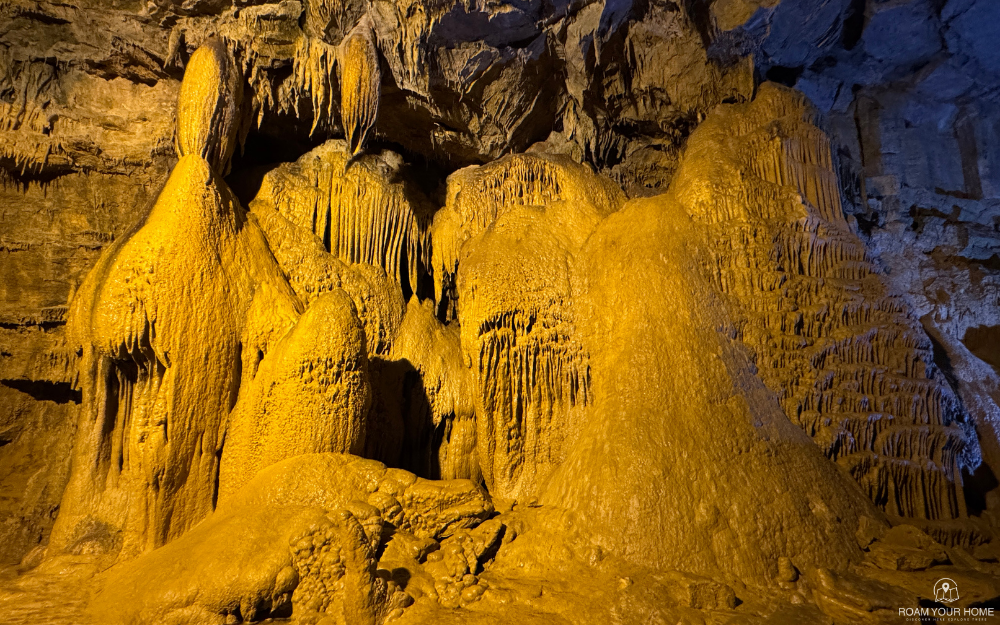
The Last Formation
The last formation you pass on the way out of the cave has no specific name. The owners say it inspires different things for different people. To us, it was simply pretty.
Pair It With a Visit to Lewisburg
After visiting the cave, spend some time exploring nearby Lewisburg. The historic downtown is packed with local restaurants, coffee shops, and galleries, and it’s consistently ranked as one of the coolest small towns in West Virginia.
Between the underground adventure and the charming mountain town above it, Lost World Caverns makes a perfect stop on any West Virginia road trip.