
Scott’s Bluff National Monument: Following Along the Oregon Trail
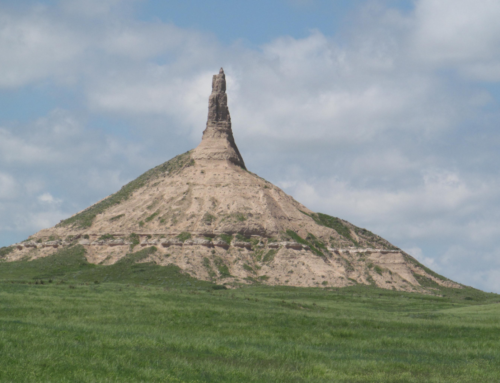
Rising nearly 800 feet above the North Platte River, Scott’s Bluff National Monument stands as one of Nebraska’s most iconic natural and historical landmarks. This dramatic formation has guided pioneers, inspired artists, welcomed visitors for centuries, and continues to do just that.
A Landmark on the Oregon Trail
Named after fur trapper Hiram Scott, who, according to legend, died at the base of the bluff in the 1820s. Scott’s Bluff became a major landmark for thousands of emigrants traveling the Oregon, California, and Mormon Trails. Today, the monument preserves not only stunning geological formations but also the memory of westward expansion in America.
Visiting Scott’s Bluff National Monument
We visited on a gloomy early fall morning. Dark clouds stretched across the morning sky when we pulled into the empty parking lot a few hours before the Visitor center opened. We spent the night before camping in Rocky Mountain National Park and were on our way towards the Black Hills and Wind Cave National Park. Scotts Bluff was a great space to stop and take in some history while stretching our legs.
Walk in Pioneer Footsteps
My wife and I decided to take a stroll along the Oregon Trail Pathway, a short 1-mile round-trip interpretive trail that follows the route emigrants’ wagons took west over 150 years ago. You pass along several replica wagons near the visitor center. They look the same as the ones used by over 350,000 people who traveled west past Scotts Bluff between 1841 and 1869.
Walking along the trail today, you are following in their path on the actual Oregon Trail when the trail switches from paved to dirt.
Today, after over a century and a half of erosion of the soft rocks, individual wheel ruts are not visible. But you can clearly see what is called a “swale,” which is a deep roadbed that was created by wagons traveling single file through Mitchell Pass.
We had the entire trail to ourselves. Looking around, it was a humbling and moving reminder of the challenges early travelers faced. We made our way back to our car and decided to take a drive.
Drive or Hike to the Top of Scotts Bluff
One of the park’s top experiences is the Scotts Bluff Summit Road, built in the 1930s and the oldest concrete road in Nebraska. The twisting route takes you through three hand-carved tunnels to panoramic overlooks where you can view the surrounding prairie and distant badlands.
Prefer to stretch your legs? The Saddle Rock Trail is a great option. This 3.2-mile round-trip trail that begins at the visitor center and climbs gradually to the summit, offering up-close views of rugged cliffs, wildflowers, and unique rock layers.
Make sure to bring your camera—sunrise and sunset light up the bluff with glowing reds and golds, making it a favorite for photographers. There are also picnic areas and benches for relaxing and taking in the expansive views of western Nebraska’s high plains.
Whether you’re tracing the trails of American pioneers or just seeking a breathtaking stop on a road trip like us, Scott’s Bluff National Monument is a rewarding destination that tells the story of courage, endurance, and nature’s majesty.
Other Places to Explore Along the Oregon Trail
Wyoming - Oregon Trail Ruts State Historic Site
Wyoming - Register Cliff State Historic Site