
Top 10 Must-See Artworks at the Cincinnati Art Museum in Ohio
Right in the heart of the Queen City’s Eden Park, with sweeping views over the Ohio River, the Cincinnati Art Museum stands out as one of the Midwest’s cultural heavy hitters—and yes, it’s still free. With more than 67,000 works covering 6,000 years of history, it’s the kind of place where you could easily spend hours and still not see it all.
So if you’re exploring Cincinnati and need a little culture, here are ten pieces that made us stop in our tracks. Not the most expensive. Not the most famous. Just ten that caught our attention—and we hope they grab yours, too.
Exploring the Cincinnati Art Museum: 10 Must-See Artworks
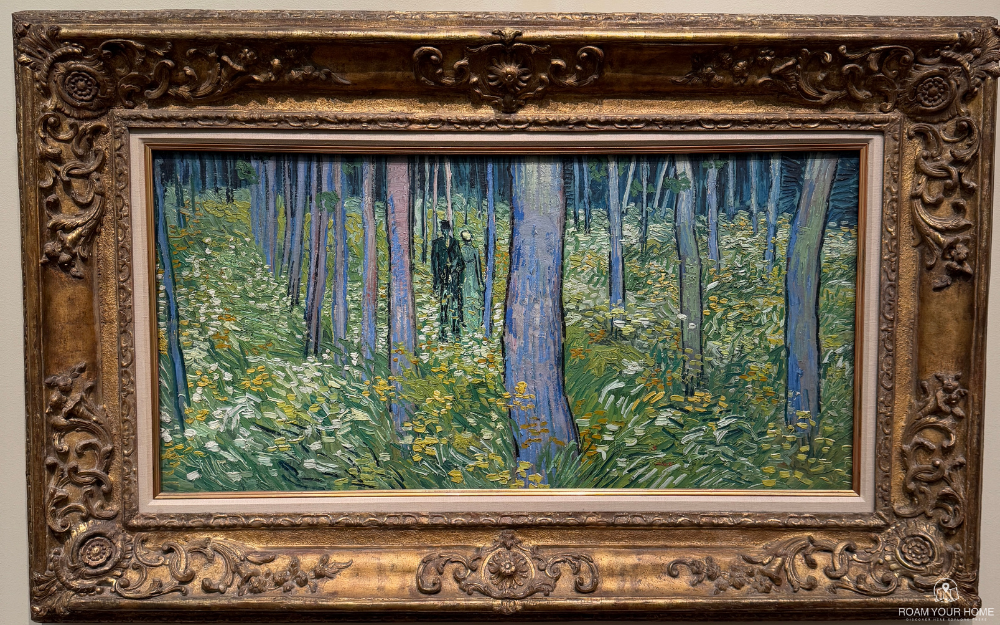
1) Undergrowth with Two Figures – Vincent van Gogh
Undergrowth with Two Figures by Vincent van Gogh is widely considered the most celebrated painting on display in the Cincinnati Art Museum. Painted in 1890 during the final months of his life, the thick brushstrokes swirl in electric greens and deep blues, pulling you straight into the forest. Stand in front of it, and you don’t just see the woods—you feel them.
I can say, from experience, that if you stand too close, an automated voice will let you know.
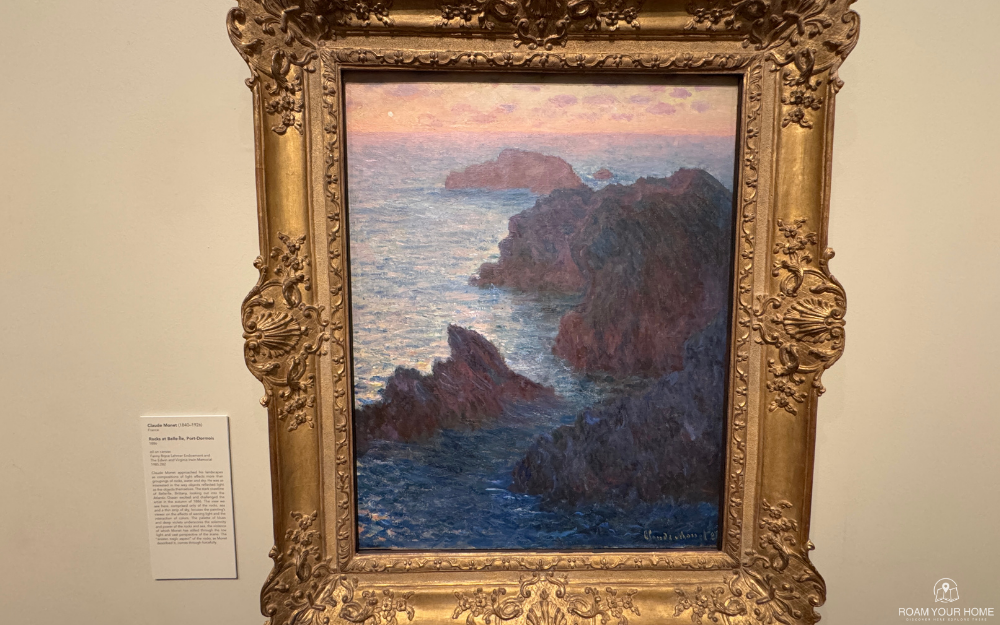
2) Rocks at Belle-Île – Claude Monet
As we’ve visited more and more art museums, French Impressionist Claude Monet has become one of our favorites. His work, Rocks at Belle-Île is no exception. When Monet traveled to the rugged island of Belle-Île off the coast of Brittany in 1886, he traded soft water lilies for crashing waves and jagged cliffs.
Rocks at Belle-Île capture the raw energy of the Atlantic. Monet’s untamed thick strokes of blues, greens, and foamy whites slam against dark rock formations, turning the coastline into motion and light.
It’s less garden-serene Impressionism and more a “sinister, tracing aspect” coming through forcefully

3) My Back Yard – Georgia O’Keeffe
By 1943, Georgia O’Keeffe had fully made New Mexico her muse—and her home. My Back Yard isn’t a sweeping desert panorama. It’s something quieter. More personal.
The work shows the cliffs she saw from her home, Ghost Ranch, 60 miles northwest of Santa Fe.
The composition is simple, almost stark—bring the cliffs up close. O’Keeffe’s signature style—clean lines, bold color fields, and simplified forms—transforms everyday scenery into something iconic and deeply American Southwest.
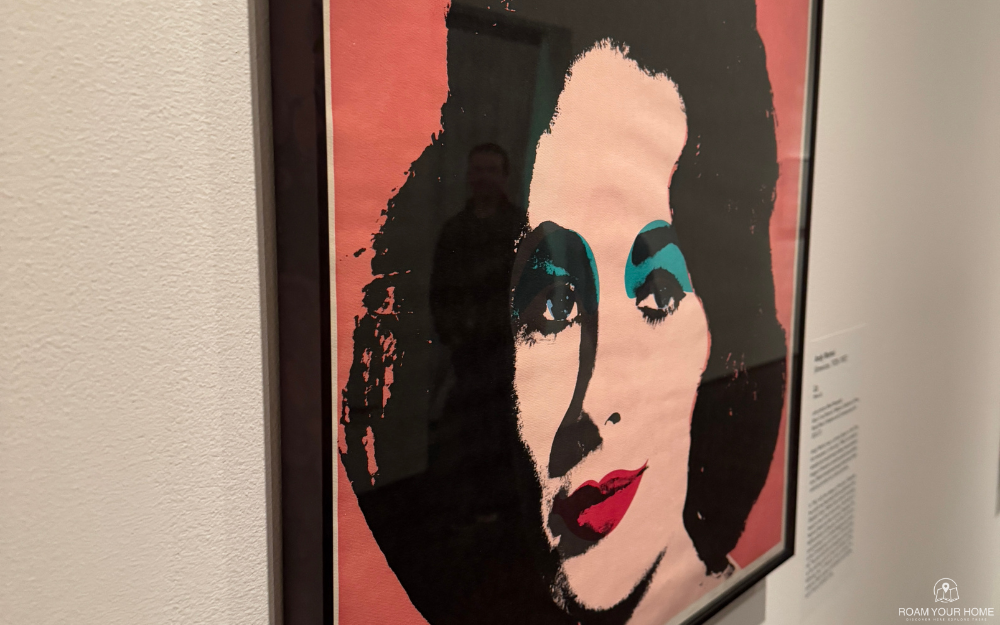
4) Liz – Andy Warhol
We spotted this one from across the gallery and immediately headed towards it.
In Liz, Andy Warhol turns Elizabeth Taylor into a blazing Pop Art icon. Her face is cropped tight, lips glowing bright red, eyes heavy with drama—all set against that unmistakable wash of red.
It’s glamorous, bold, and larger-than-life. But, Warhol wasn’t just painting a movie star—he was capturing the machine of fame.
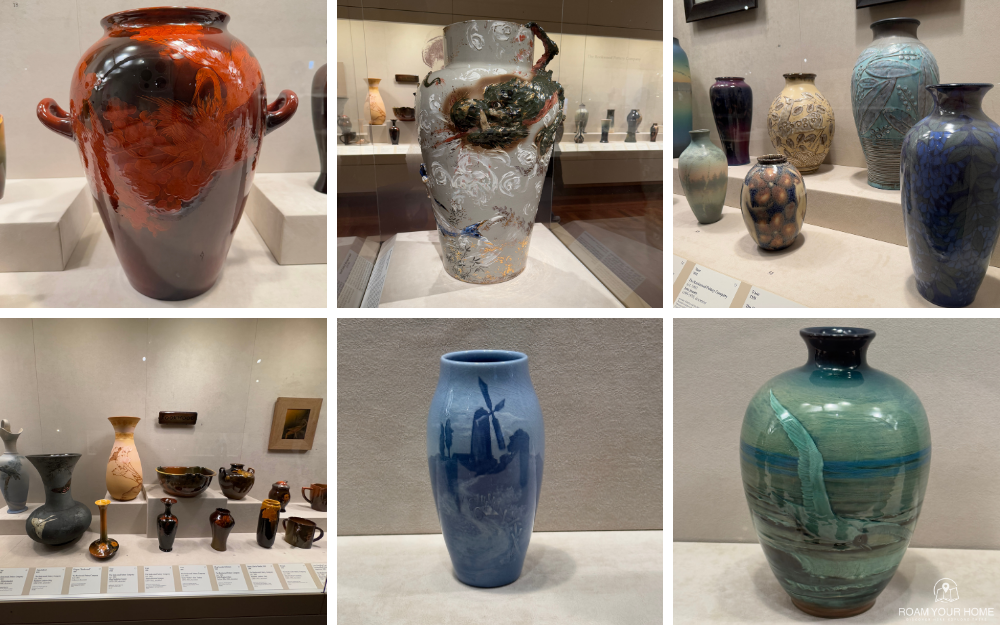
5) Rookwood Pottery
Sometimes you don’t have to travel far to find a masterpiece—sometimes it’s homegrown.
Founded in 1880, Rookwood Pottery helped put Cincinnati on the global art map. Its rich, moody glazes and hand-painted florals became hallmarks of the American Arts and Crafts movement, earning international awards while staying proudly rooted in the Queen City.
Wander through this section and slow down. Look at the detail. The depth of color. The craftsmanship. Get this, they are still in business. You’ll be inspired to visit their nearby factory store to pick up a piece or two. I know we did.
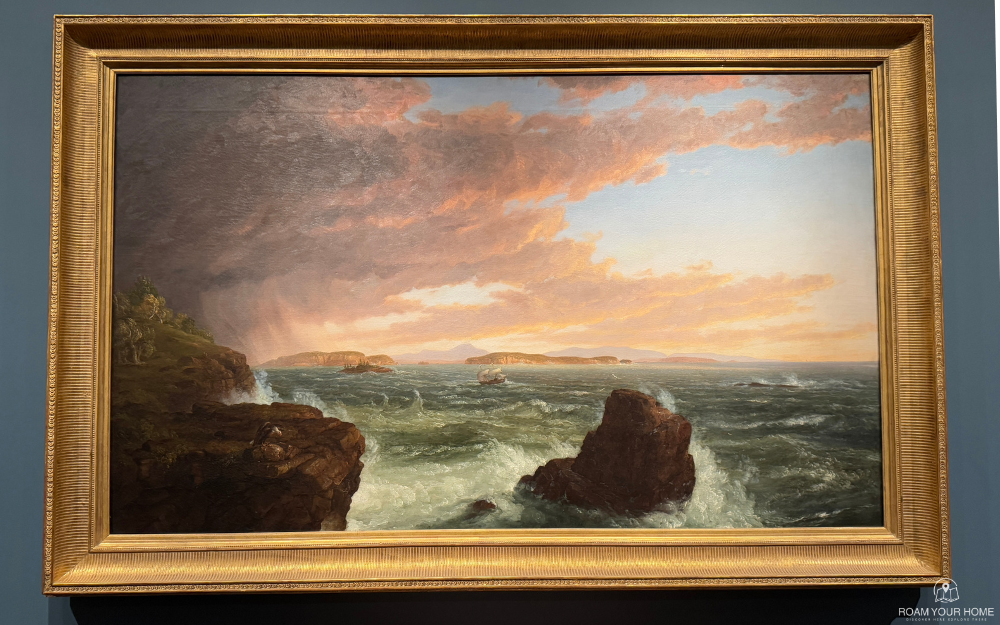
6) View Across Frenchman’s Bay from Mt. Desert Island (After a Squall) – Thomas Cole
Before Acadia became a world-famous national park, Thomas Cole captured its raw, rugged coastline—painting the kind of wild beauty that would inspire generations to come.
In View Across Frenchman’s Bay from Mt. Desert Island (After a Squall), dark clouds pull back to reveal light breaking over the Maine coastline. The sea still churns. The sky still feels heavy. But hope is cutting through the storm.
Cole, founder of the Hudson River School, painted American landscapes as something almost sacred—vast, untamed, and deeply emotional. Stand in front of this one, and you can imagine what it was like for Cole standing there 150 years ago.
It’s a reminder that this coastline has been inspiring travelers for centuries.
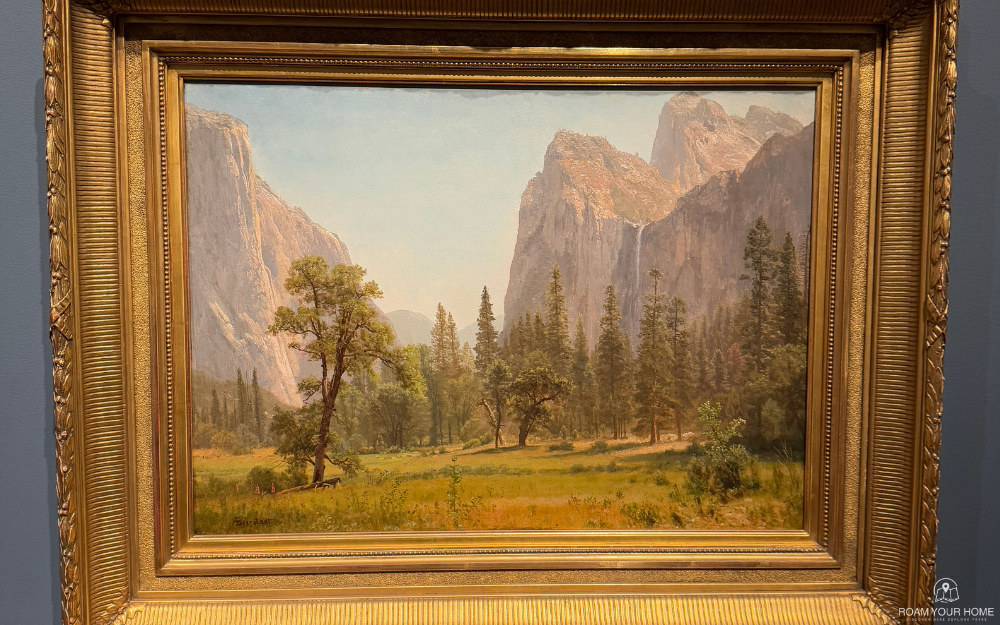
7) Bridal Veil Falls, Yosemite Valley, California – Albert Bierstadt
John Muir may get much of the credit for putting Yosemite on the map, but Albert Bierstadt helped paint it into America’s imagination.
In his work Bridal Veil Falls, Yosemite Valley, California, Bierstadt bathes the iconic waterfall in golden light, with towering granite cliffs rising around it. The scene instantly takes you to Yosemite Valley.
A leading painter of the Hudson River School’s western expansion, Bierstadt helped introduce Americans (and Europeans) to the awe of the frontier. This style is some of our favorite art.
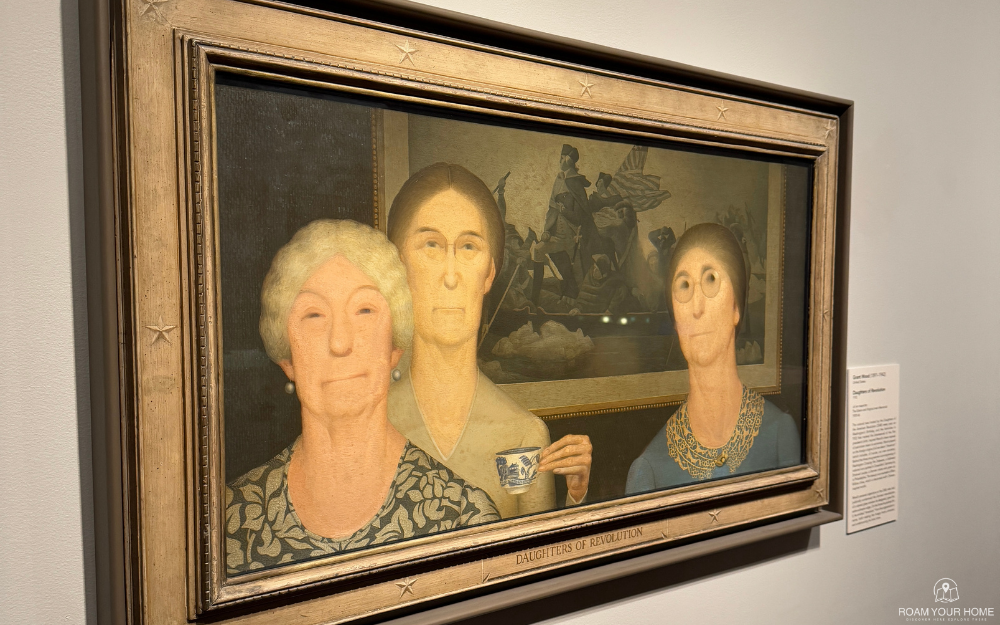
8) Daughters of Revolution – Grant Wood
With nearly every visit to an art museum, we find something unexpected that we really enjoy. And that’s exactly what you’re looking at here—three proper, stone-faced women standing ramrod straight in front of a reproduction of Washington Crossing the Delaware. It feels formal at first glance… until you realize the satire is doing most of the talking.
In Daughters of Revolution, Grant Wood takes a playful jab at patriotic societies obsessed with lineage and tradition. The women clutch teacups, wrapped in lace collars and Revolutionary pride, while the grand historical scene looms behind them.Wood, best known for American Gothic, had a sharp sense of humor beneath his polished Regionalist style. Look closely, and you’ll see it here—tight smiles, exaggerated features, and a subtle wink at American nostalgia.
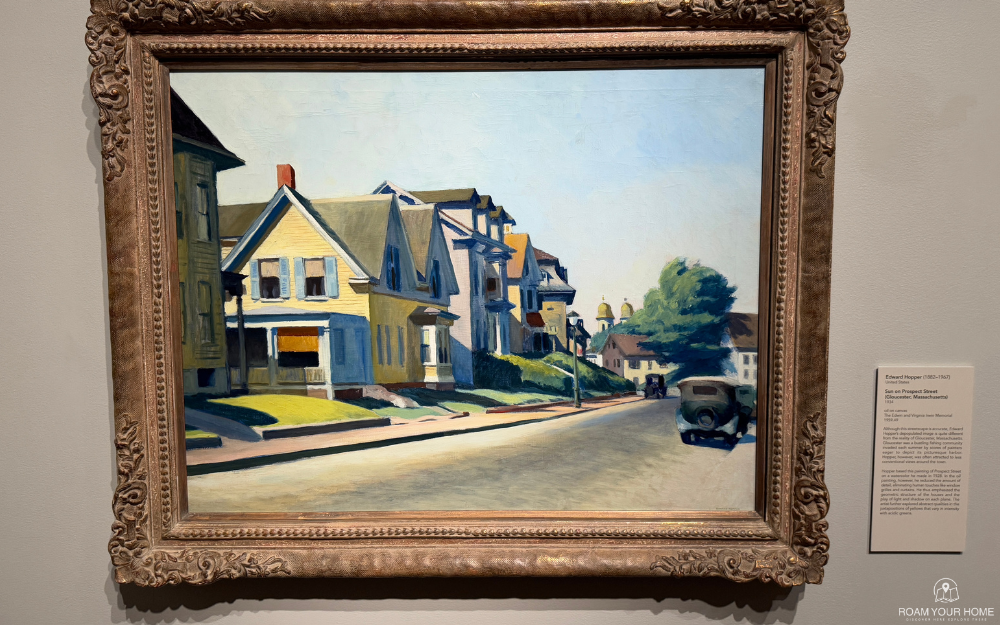
9) Sun on Prospect Street – Edward Hopper
It’s just a house. Quiet. Still. Bathed in light.
But in Sun on Prospect Street, Edward Hopper turns an ordinary New England home into something cinematic. The sharp sunlight hits the façade at an angle, casting deep shadows and giving the simple structure a mood—and maybe even a sense of mystery.
Even this early on, you can see the Hopper he’d become—strong angles, sharp sunlight, and that quiet feeling that lingers in the air. Nothing dramatic is happening. No people rushing by. Just a building sitting in the light.
It’s simple. It’s ordinary. And somehow, it says everything.
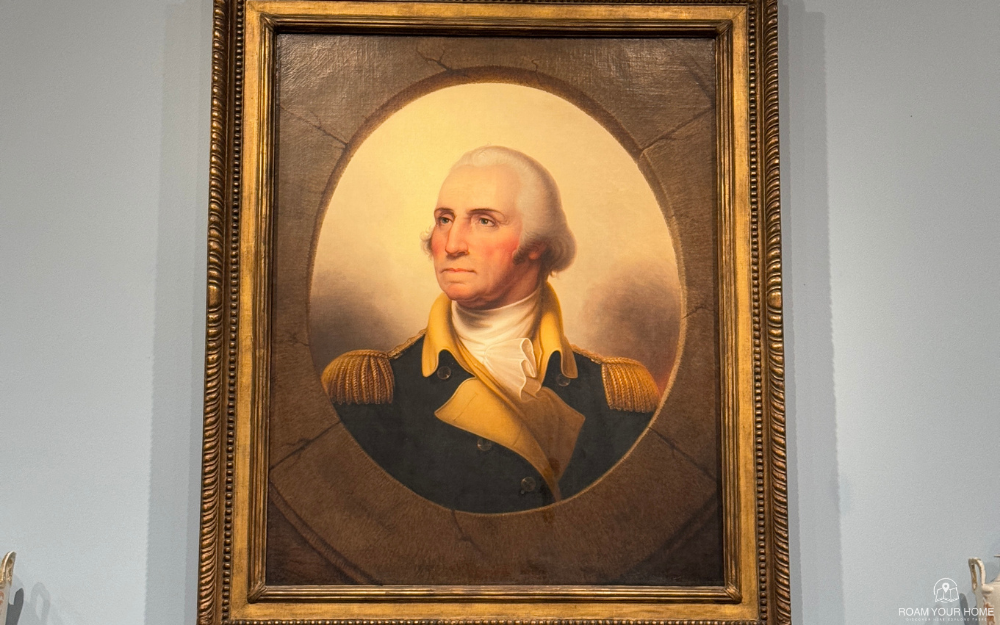
George Washington (c. 1845) – Rembrandt Peale
You’ve likely seen many portraits of President George Washington — but maybe not like this.
In his circa 1845 portrait, Rembrandt Peale frames George Washington within a dramatic oval “porthole.” Standing in front, it feels like you are almost looking through a window into history.
Peale was obsessed with getting Washington “just right,” painting him multiple times throughout his career. This version feels refined and almost larger than life—less the battle-tested general, more the steady, symbolic Father of the Country.
Why the Cincinnati Art Museum Is Worth the Stop
Free admission. World-class art. River views.
Whether you’re road-tripping through Ohio or building a Midwest art weekend, the Cincinnati Art Museum delivers global masterpieces without the big-city crowds. It’s one of those places that quietly over-delivers—and that’s exactly the kind of stop we love to highlight.