

Inside The Andy Warhol Museum in Pittsburgh: A Floor-by-Floor Guide to the World’s Largest Warhol Collection
Pittsburgh is home to one of the most dynamic art museums in America. The Andy Warhol Museum spans seven floors and houses the largest collection of artwork and archival materials by the Pittsburgh-born pop art icon.
Unlike many art museums, this one tells a chronological story. The best way to experience it? Take the elevator straight to the 7th floor and work your way down—descending through Warhol’s life, career, controversies, and cultural impact.
Exploring The Andy Warhol Museum in Pittsburgh
We arrived at the museum on Pittsburgh’s North Shore in the afternoon, about three hours before it closed. There is a pay parking lot kitty corner from the museum. After paying the entrance fee, were excitedly on our way. You often see a few Andy Warhol pieces at art museums, but immersing ourselves in them was going to be amazing.
Here’s how the tour worked on our latest visit, floor by floor.

7th Floor: Early Life & Beginnings – 1920s – 1950’s
The tour begins with an elevator ride to the 7th floor. From here, you learn about a young Andrew Warhol, the son of working Slovak immigrants, growing up in Pittsburgh. This floor focuses on:
Warhol’s childhood drawings
Early commercial illustrations from his New York career
Magazine ads and shoe illustrations
His transition from commercial artist to fine artist
You see the foundation here—the precision, repetition, and fascination with consumer culture that would define his career. It’s quieter, more intimate, and gives context before the bold colors hit you downstairs.
6th Floor: Pop Art Explosion – 1960’s
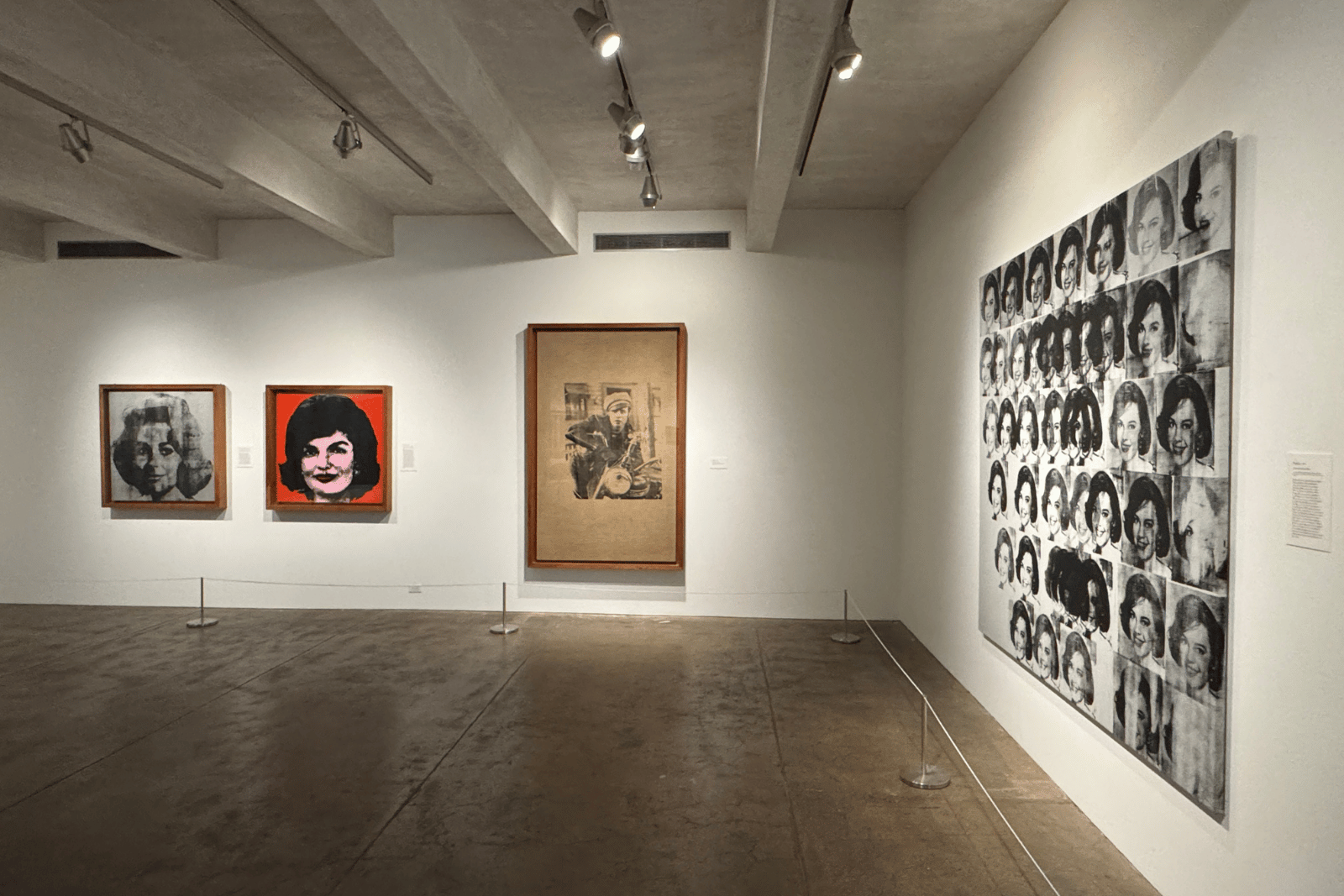
Heading down to the 6th floor, this is where Warhol becomes Warhol.
This floor showcases Warhol’s breakthrough into pop art in the early 1960s, including works inspired by everyday objects such as grocery store shelves, celebrity culture, and mass production. These subjects blurred the lines of what is considered fine art.
Expect iconic screenprints and bold color palettes. The repetition is intentional. This floor is one of the highlights of our visit.
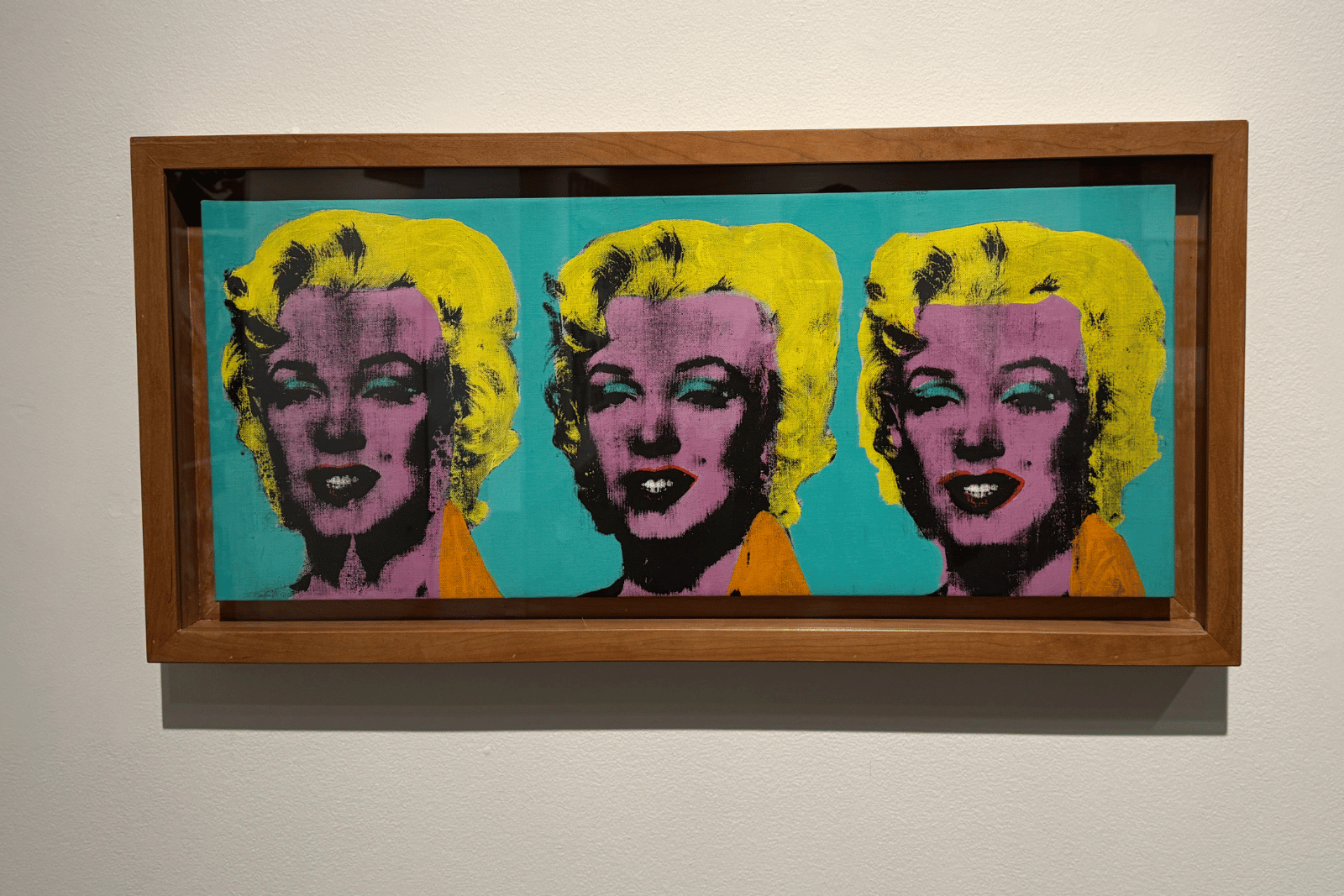
Three Marilyns, 1962
Warhol’s paintings of Marilyn Monroe are amongst his most famous works. Three Marilyns is one of his works on the actress and is among his first photo-silkscreen works. He used a photograph from the 1953 film Niagara.
Warhol made the work after she passed away in August of 62, as not only a tribute to “her beautiful face” but also a reflection on American society’s insatiable appetite for celebrity and tragedy.
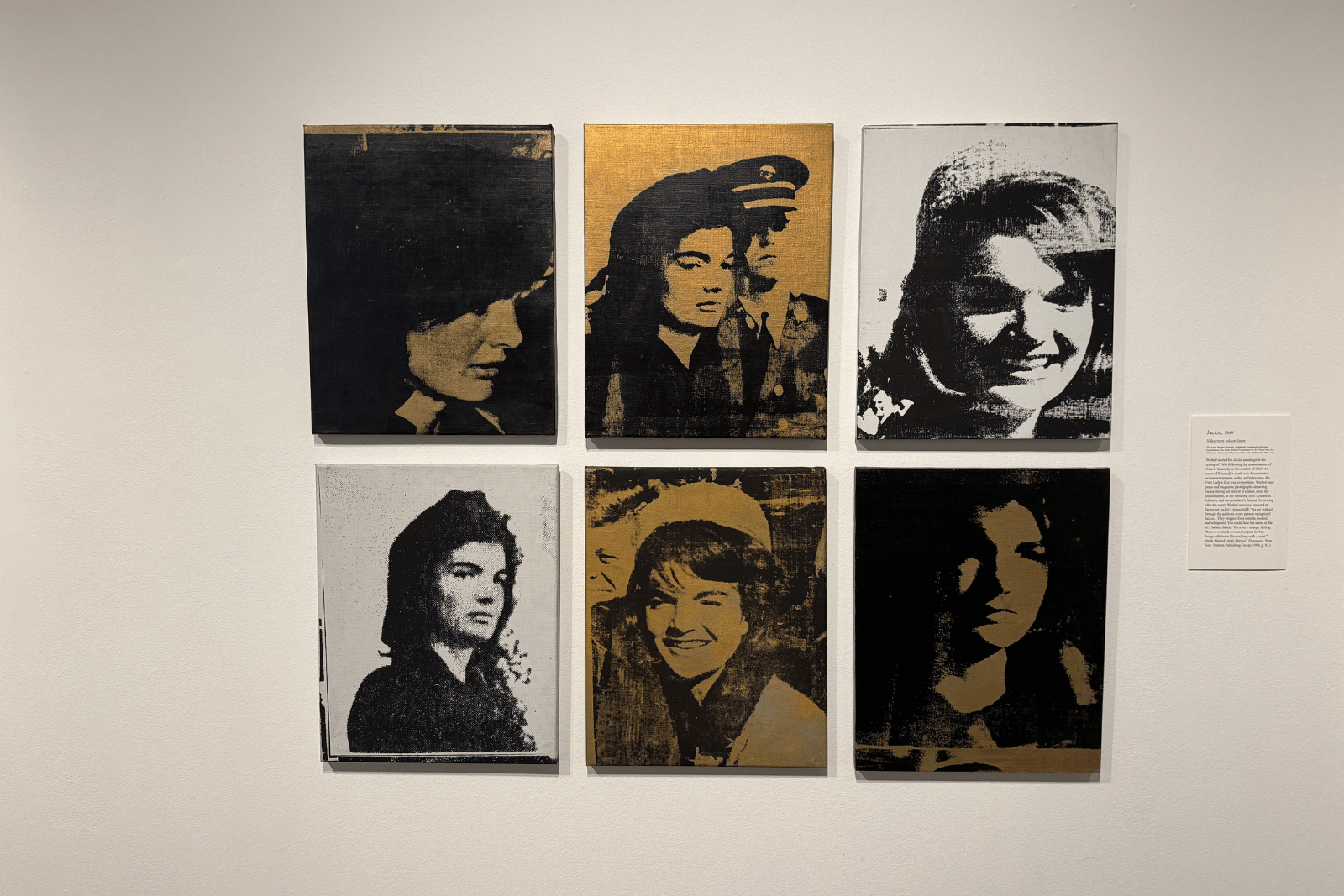
Jackie, 1964
Warhol began painting Jackie in the spring of 1964, following the assassination of her husband, President John F. Kennedy. Warhold was amazed and inspired by her poise amid tragedy. He captured that strength by using prints of her in Dallas, at Lyndon B. Johnson’s swearing and at JFK’s funeral.
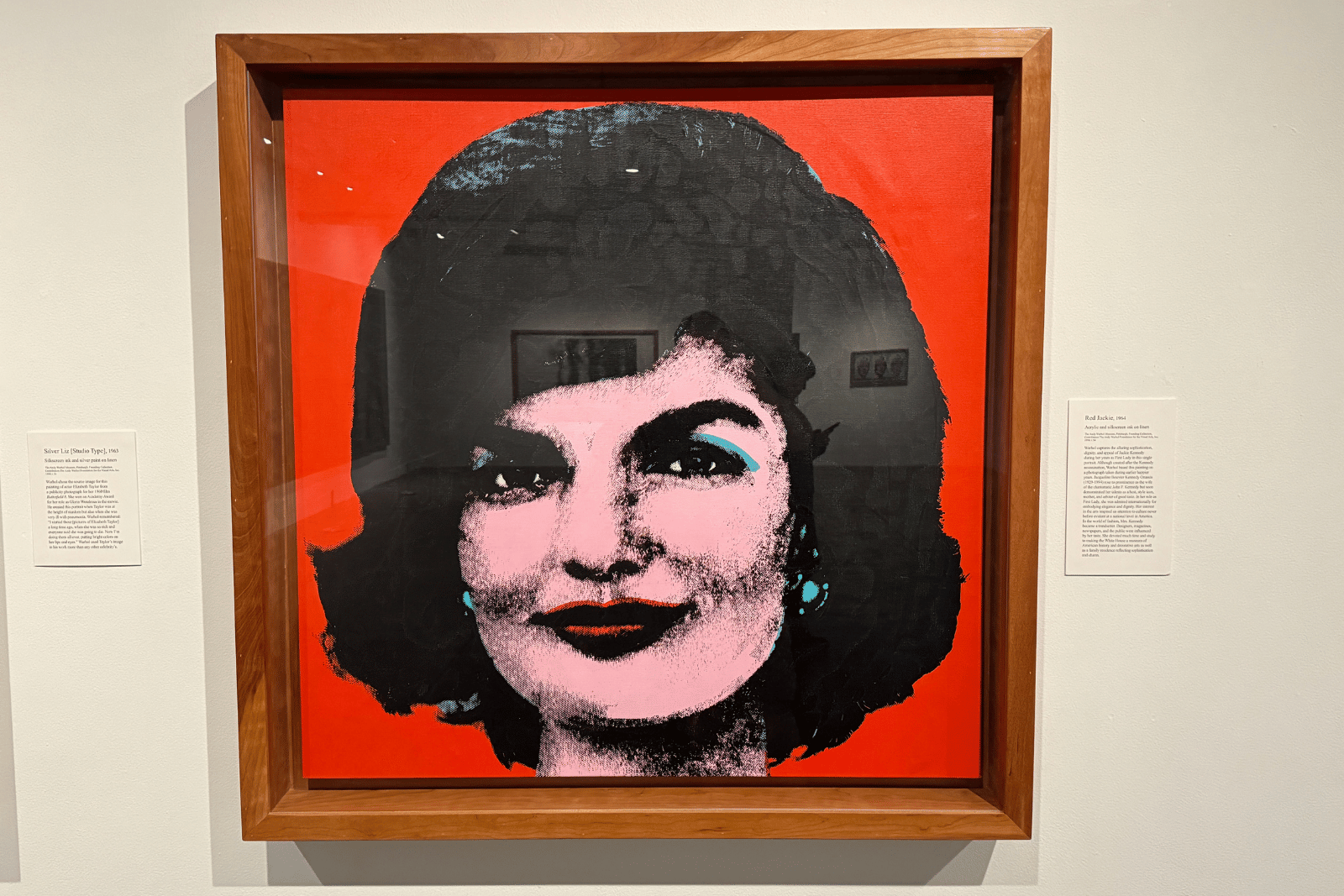
Red Jackie, 1964
Red Jackie is a single portrait of Jackie Kennedy. This was part of the large Jackie series. Here, Warhol based his painting on a photograph of Jackie from happier times before tragedy struck. With the bold red background and slight smile, Warhol captures her sophistication through sharp contrast, before her husband’s death.

Elvis 11 Times, 1963
Another big highlight for us was Elvis 11 Times. The work is considered one of Andy Warhol’s iconic silkscreen works featuring Elvis Presley. The piece repeats the same publicity still of Elvis dressed as a gunslinger from the 1960 Western film Flaming Star, lining the image up eleven times across the canvas. By this time, Elvis had basically abandoned music for the silver screen.
It’s a part of Warhol’s larger “Elvis” series; the repeated figure turns the King of Rock and Roll into a mass-produced symbol, less a person and more a cultural product. The metallic or silver-toned background often used in the series adds a cinematic tone, evoking both Hollywood glamour and the mechanized reproduction of fame.
By multiplying Elvis across the surface, Warhol blurs the line between celebrity and commodity, highlighting how media repetition transforms entertainers into icons.
Screen Tests Machine
Warhol wasn’t just a visual artist—he was also a filmmaker.
On the 6th floor, you can enjoy an immersive experience in his avant-garde film projects and “Screen Tests,” short portraits of Factory regulars and celebrities. The vibe here is darker and more experimental.
You can’t help but take a moment to sit and watch here. It’s slower. Intentional. Slightly uncomfortable. Exactly as Warhol intended.
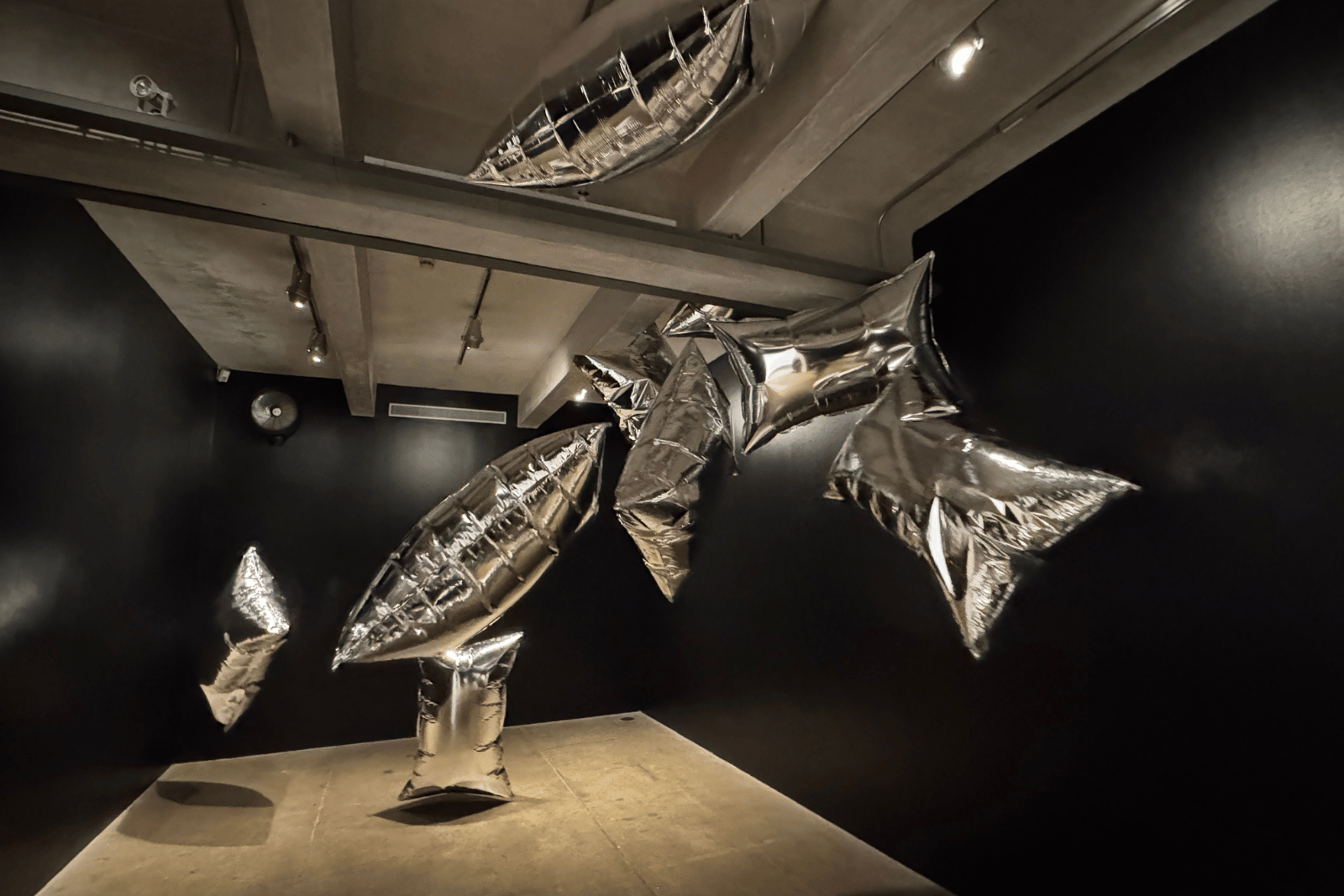
5th Floor: Silver Clouds & Portraits of the 1970s
This is the most playful floor—and often the crowd favorite. Here you’ll encounter Silver Clouds, Warhol’s famous installation of floating metallic pillows filled with helium. Visitors can walk among them, gently pushing them into motion. It’s immersive, whimsical, and surprisingly joyful. Kids love it. Adults turn into kids.
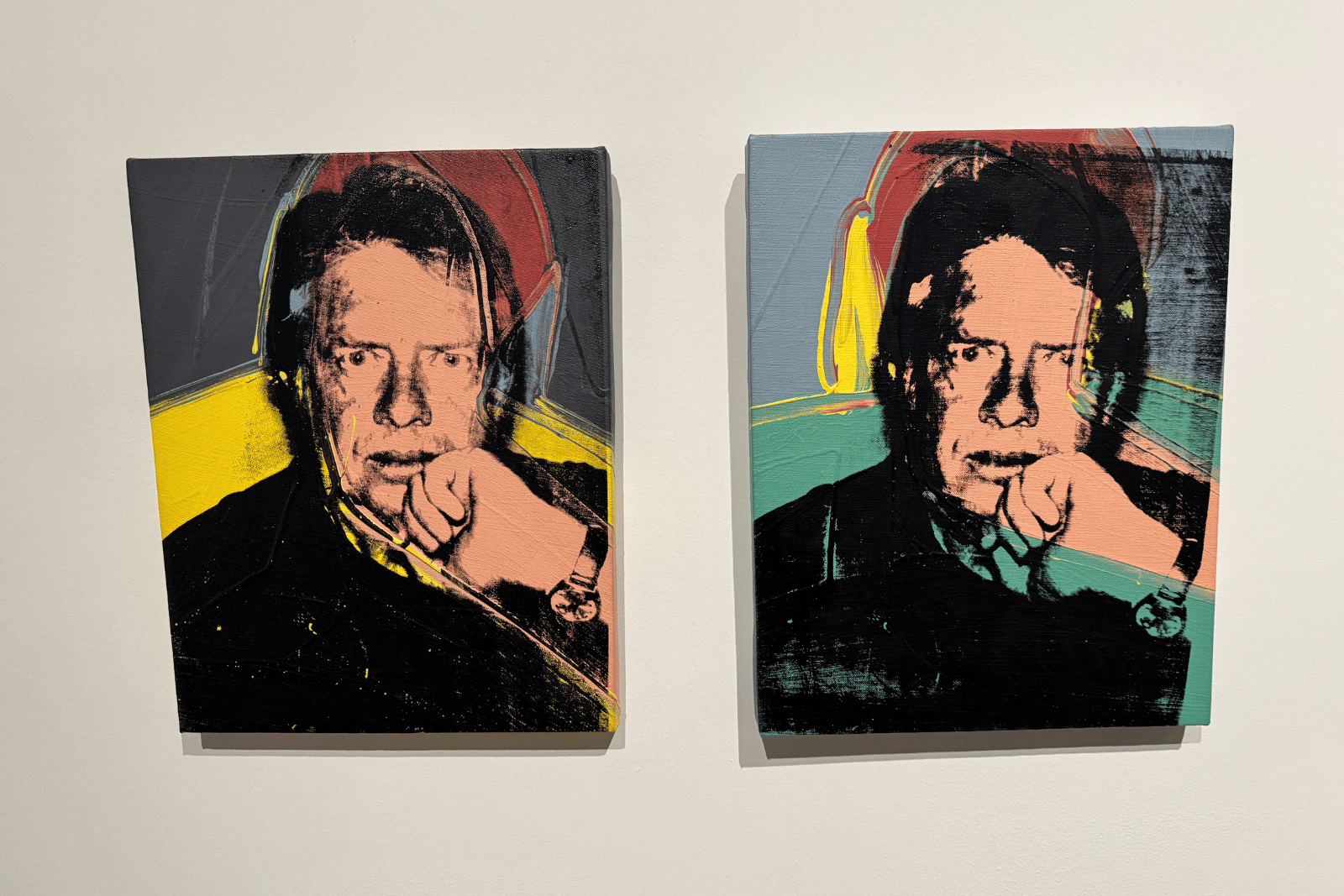
Jimmy Carter, 1976
Before he was sworn in as America’s 39th president, Jimmy Carter became a work of Pop Art.
In 1976, Andy Warhol created this bold, colorful screenprint as a campaign fundraising piece during Carter’s presidential run. The portrait transforms the Georgia peanut farmer-turned-candidate into a modern icon—washed in bright, almost electric color, flattened into Warhol’s unmistakable graphic style.
Unlike Warhol’s cooler, more detached celebrity portraits, this one feels hopeful. It reflects a country looking for a reset after Watergate—new leadership, fresh energy, and a different kind of political image.
This piece jumped out to us—not just because it’s a president, but because it captures that uniquely American blend of democracy and celebrity.
4rd Floor: The 1980s & Collaboration
On the fourth floor, you continue to see the evolution of one print here that particularly caught our attention.
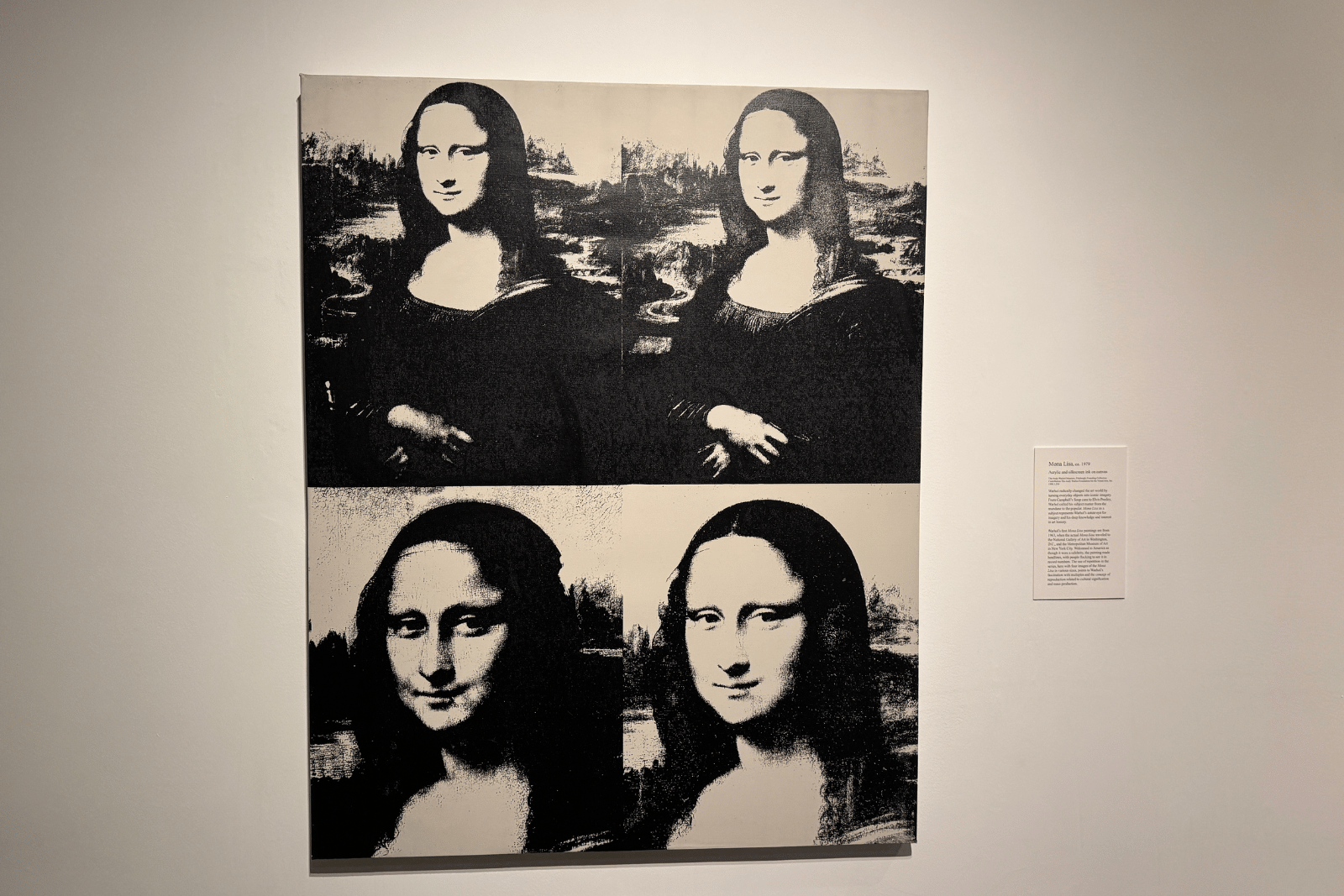
Mona Lisa
We haven’t stood face-to-face with the world’s most famous painting—yet—but we have seen what happens when it collides with Pop Art. The result? Pure Warhol.
In 1963, after the Louvre’s legendary Mona Lisa toured the United States, Andy Warhol created his own version of the masterpiece. Borrowing the instantly recognizable image originally painted by Leonardo da Vinci, Warhol reproduced it using silkscreen—sometimes once, sometimes more. On display during our visit was Mona Lisa Four Times.
Repetition is the point. Warhol wasn’t mocking the Mona Lisa—he was highlighting how even the most revered art becomes a commodity in the modern media age.

Ten Punching Bags (Last Supper)
One of the most interesting works inside The Andy Warhol Museum is Ten Punching Bags (Last Supper)—a mid-1980s collaboration between Andy Warhol and Jean-Michel Basquiat. Ten white heavy bags hang in a row, each printed with Christ’s face from The Last Supper and layered with Basquiat’s raw markings.
They aren’t meant to be hit—they’re sculptural statements. By placing a sacred image on punching bags, the artists confront themes of faith, fame, and cultural pressure.
3rd Floor: Personal Archives & Time Capsules
Warhol was a collector—almost obsessively so. This level highlights his massive “Time Capsules,” cardboard boxes filled with everyday objects, letters, receipts, photos, and ephemera he saved throughout his life. More than 600 boxes survive.
2nd Floor
The second floor was closed for installation during our last visit, but features rotating exhibits.
1st Floor: Special Exhibitions & The Warhol Store
The ground floor houses the museum shop. The store is worth browsing—expect bold prints, pop-inspired gifts, books, and clever nods to Warhol’s most famous works.
We picked an Elvis 11 Time print to add to our personal collection at home.
This concluded our visit, but it was very much worth it. If you are in the area, make sure to make time to explore the world’s largest collection of Warhol’s art. Whether you’re an art lover or just curious about the man behind the soup cans, this museum delivers far more depth than you might expect.


