
Roger Taney’s Grave in Frederick, Maryland: A Stop Tied to One of America’s Most Controversial Court Decisions
Roger B. Taney’s grave in Frederick, Maryland, is not the kind of historic stop you visit because it feels warm or celebratory. It’s a small cemetery stop with a surprisingly heavy story behind it.
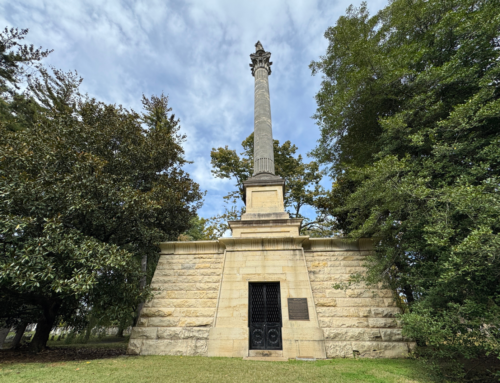
Located at St. John’s Cemetery, the grave itself is fairly simple. If you did not know the name, you might walk right past it. But Taney was the fifth chief justice of the United States, and his legacy is forever tied to the Supreme Court’s 1857 Dred Scott decision, one of the most infamous rulings in American history.
Taney wrote the majority opinion in the case, ruling that Dred Scott, an enslaved man who had lived in free territory, was still not entitled to his freedom. The decision also said Black Americans could not be citizens and argued that Congress had no power to prohibit slavery in the territories. It was a devastating ruling that helped intensify the divisions already pushing the country toward Civil War.
That is what makes a visit here feel so different. It is not a grand memorial or an uplifting historic stop. It is a quiet place that connects directly to one of the darkest chapters in the Supreme Court’s story. Standing there, you can’t help but be reminded that not every historic site tells a proud story, but some are still worth seeing because of what they reveal about the country’s past.
A small plaque reads:
ROGER BROOKE TANEY
Fifth Chief Justice of
The Supreme Court of the United States
Born in Calvert County, Maryland, March 17, 1777
Died in the city of Washington, October 12, 1864
Aged 87 years, 6 months and 25 days
He was a profound and able lawyer
An upright and feerless judge
A pious and exemplary Christian
At his own request he is buried in this
secluded spot near the grave of his mother
It is a quick stop; we spent less than ten minutes, but not a light one. If you are interested in American history in all its complexity, this is one of those places that makes you think.