

Bodie State Historic Park: Exploring California’s Best-Preserved Gold Rush Ghost Town
In a remote valley in the rolling hills east of the Sierra Nevada sits an unforgettable glimpse into the rough-and-tumble days of the California Gold Rush. Once a thriving mining town, today Bodie stands eerily frozen in time — preserved in a state of “arrested decay.” You can wander its deserted streets, peek into homes and businesses left just as they were, and imagine life in what was once known as the most lawless, wild, and tough mining camp in the West.
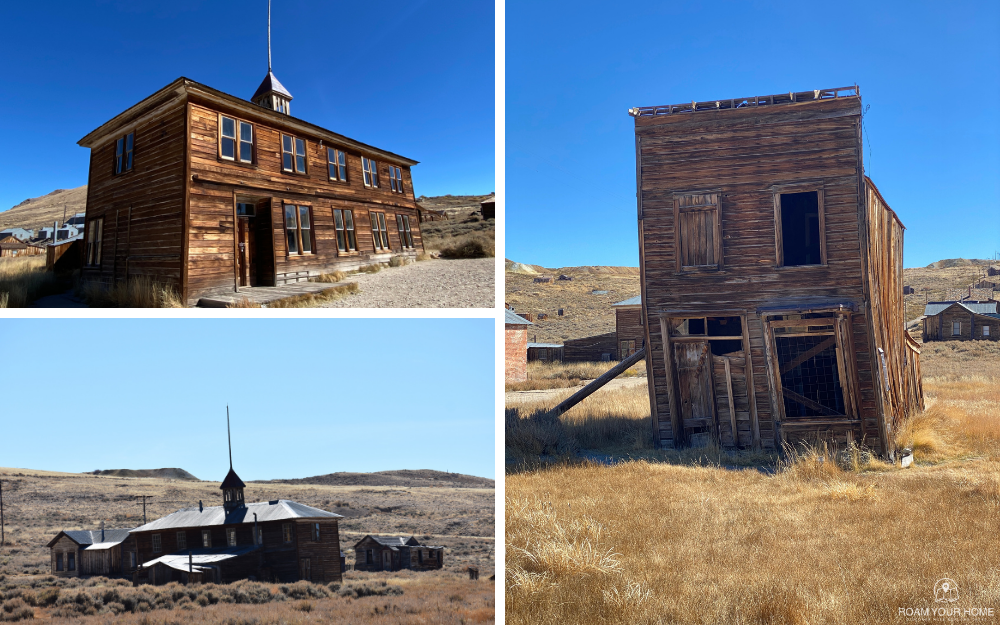
Visiting Bodie State Historic Park
Bodie State Historic Park preserves one of the most authentic Gold Rush ghost towns in the American West. Located northeast of Yosemite National Park, Bodie is 13 miles east of Highway 395 on S.R. 270. Heads up, the last three miles to the park are on a rough dirt road.
We decided to visit on a whim. We’d just spent an early summer weekend hanging out in the Tahoe area and were looping home through Yosemite.
The drive from the main highway is deceptively long. Bodie is at 8,375 ft in elevation, and the road is a steep, windy mountain road. Slowly descending down the rutted dirt road, the first view feels unreal: a full skyline of wooden buildings rising from the sagebrush basin, as if the 1880s never quite finished.
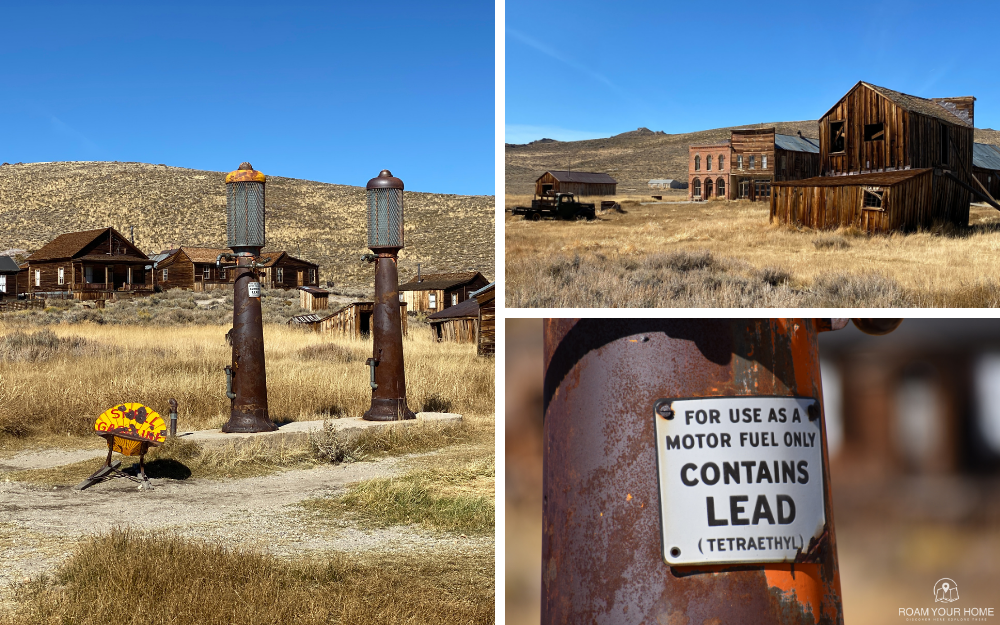
A Brief History of Bodie, California
Bodie’s story begins in 1859 when a group of prospectors, including W.S. Bodey, discovered gold in the hills north of Mono Lake. Although Bodey himself was killed in a blizzard shortly thereafter, his name lived on as the settlement grew.
The community grew slowly in the 1860s and early 1870s due to valuable strikes in Aurora, Nevada, and at the Comstock Mine in Virginia City. That would change by the late 1870s, when Bodie exploded into a bustling town after a particularly rich vein of gold and silver ore was uncovered.
At its peak, Bodie held nearly 10,000 residents. There were dozens of saloons, dancehalls, hotels, a red-light district, a Chinatown, schools, and churches. Gold brought money fast — and trouble even faster. Gunfights, robberies, stage holdups, and drunken brawls all contributed to its reputation for lawlessness.
Bad Man of Bodie
The anarchy launched a legend that started as a whisper from locals… that rapidly grew into a national phenomenon… The “Bad Man of Bodie.”
This fellow was said to be a short-tempered, grizzled, whiskey swilling cold blooded outlaw who would pull irons just because he wanted to kill someone. When Bodie was at its peak, there were few people across the nation who had not heard of the bad man.
It’s generally believed that the Bad Man of Bodie was not a single person but a composite of several bad men who caused trouble on the streets. Others say he’s less a single man and more the restless spirit of Bodie’s lawless past. Whether ghost or folklore, the Bad Man of Bodie lingers in the creak of old boardwalks and the wind that howls through this once-wild frontier town.
It was not just a crime. There was danger elsewhere. Fires often ripped through, and hard winters defined life here. When all combined, the town’s reputation was summarized by a young girl who reportedly wrote in her diary: “Goodbye God, I’m going to Bodie.”
Like so many mining towns, Bodie’s fortune was fleeting. As the mines were depleted and fires ravaged parts of the town, residents gradually moved on. By the 1940s, Bodie was almost completely abandoned. In 1962, the part of the town that did not burn in 1932 was designated a historic site. California established Bodie State Historic Park, preserving the town in its semi-ruined state.
What to See at Bodie State Historic Park
Today, the park preserves the town in a state of “arrested decay.” Nothing is restored to look new; instead, buildings are stabilized exactly as they were found. Inside windows, you’ll see tables still set, merchandise on shelves, and dust covering everything like a second history written over the first.
We parked on a beautiful, warm early summer afternoon. Pulling into the surprisingly large but nearly empty parking lot, the sky was a shade of dark blue you don’t often see.
Getting out, my wife and I started walking the dusty dirt streets, which were quiet except for the wind. Over 100 buildings remain standing, their weathered wood facades and dusty interiors offering a powerful sense of the past.
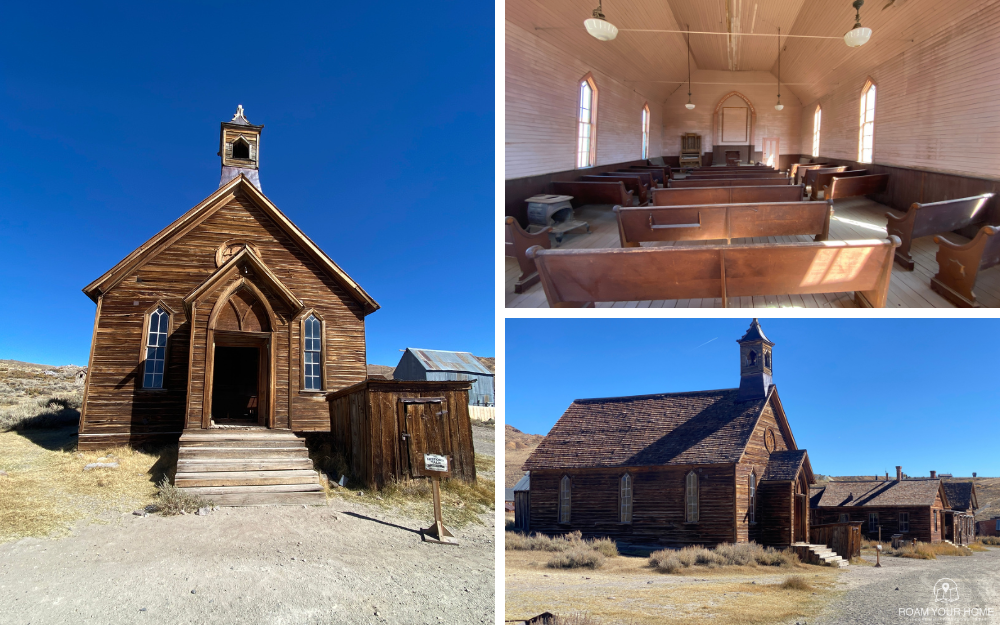
Methodist Church
The Methodist church stands intact and is a highlight. You can walk in and take a seat in a pew, where I’m sure many who were in need of Jesus went looking. The schoolhouse still holds desks. In homes, furniture, dishes, and even children’s toys still rest as if the occupants simply walked away.
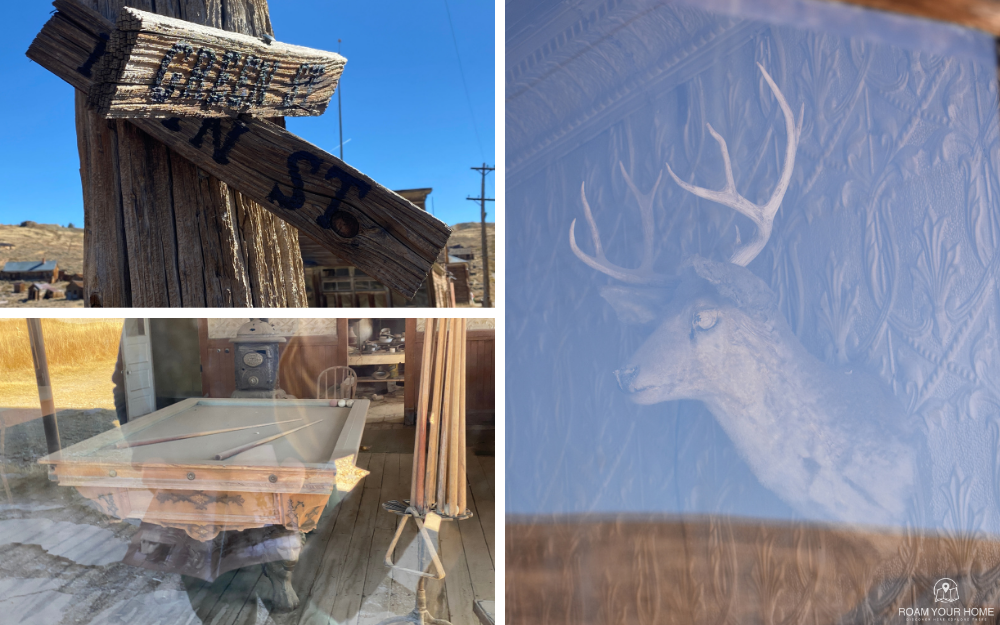
Bodie’s Abandoned Saloons and Hotels
One of the saloons, or an old hotel, that I peered into the windows of was both exceptionally cool and very creepy. You can see a billiards table, sticks, and balls covered in a thick layer of dust. On the wall was a buck mule deer mount that was probably more than a century old and appeared to have had its eyes removed. Again, a bit spooky, but could not ask for a more authentic, well-preserved ghost town feeling.
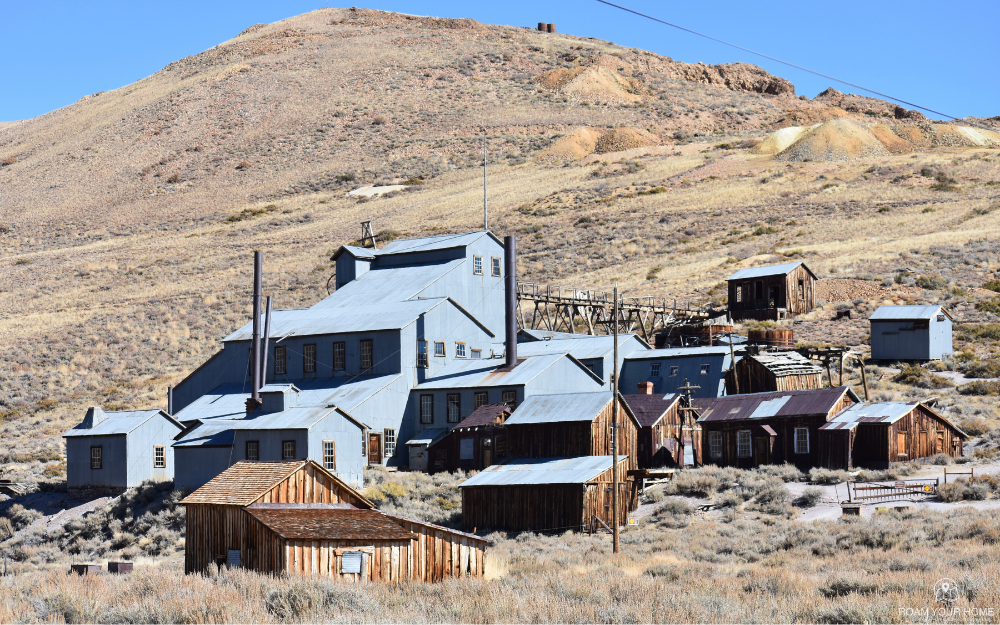
Standard Mill
The Standard Mill towers above the valley — a reminder of the industry that built and abandoned the town in barely a generation.
We spent more than two hours walking the streets exploring. The entire time, it felt like being a part of a sepia-toned photograph from another century.
What makes Bodie powerful isn’t ruins — it’s absence. You don’t imagine what was here. You see what remains after everyone left.
Whether you’re a history buff, a photographer, or simply someone seeking a unique adventure, Bodie State Historical Park offers a rare and moving experience.


