

Exploring Bent’s Old Fort National Historic Site
Bent’s Old Fort National Historic Site, situated on the banks of the Arkansas River in southeastern Colorado, gives a unique look into the 19th-century American frontier.
Established in 1833 by William and Charles Bent, along with their partner Ceran St. Vrain, the fort served as a vital trading post between Anglo-American settlers and the Southern Cheyenne and Arapaho tribes.
A Hub of Commerce and Culture
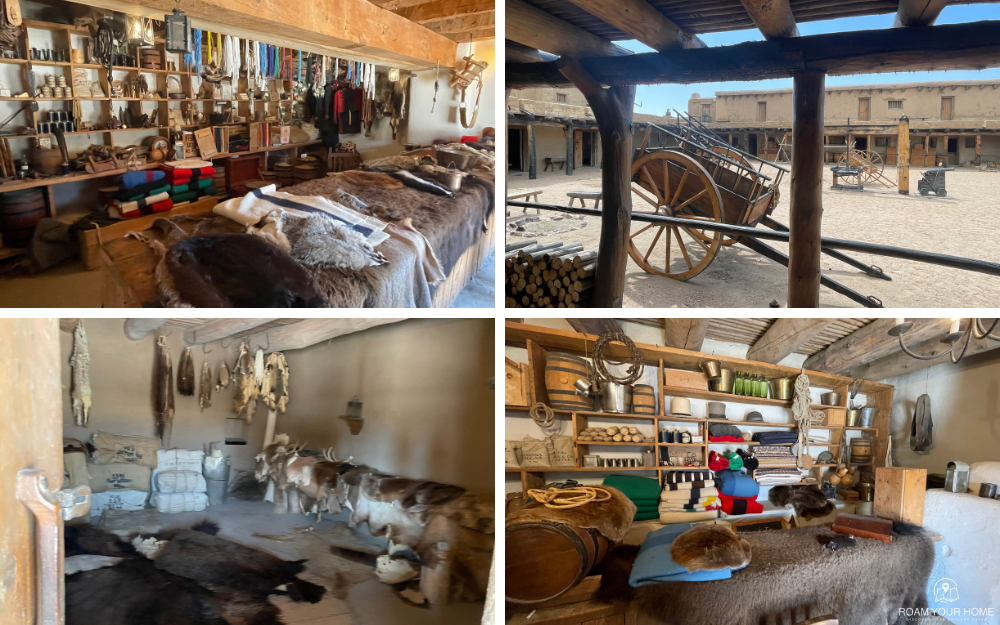
For 16 years, Bent’s Fort was a bustling center of commerce on the Santa Fe Trail, facilitating trade in buffalo robes and other goods. For most of those years, the fort was the only white permanent settlement between Missouri and Mexican-controlled lands.
The fort’s strategic location made it a meeting point for diverse cultures, including Native American tribes, trappers, traders, and explorers. Including legendary figures such as Kit Carson and John C. Frémont, who frequented the fort during their expeditions.
A cholera epidemic struck in 1849, forcing the abandonment of the fort. Nearly 140 years later, Bent’s Fort was reconstructed with archaeological research, paintings, original sketches, diaries, and other historical data. It’s believed the fort’s adobe walls look much the same today as they did in their heyday.
Visiting Bent’s Old Fort Today
My wife and I visited the Bent’s Old Fort National Historic Site during a fall trip through Colorado. We pulled into the surprisingly large parking lot mid-afternoon. Given the remote location, I was genuinely surprised by the dozen or so cars parked.
From the parking lot, it’s a few hundred yards walk along a paved path to the fort. It was a hot walk towards the fort. Along the way, we passed the grave of an old stagecoach driver who had died there in the 1860s.
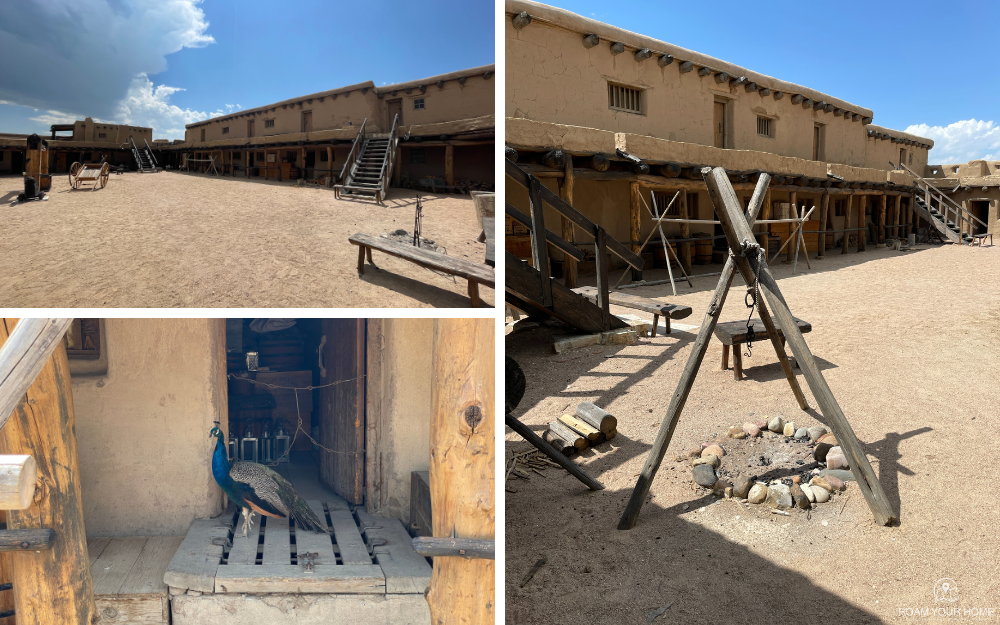
Walking into the adobe structure was like stepping back in time. Bent’s Old Fort has been meticulously reconstructed to reflect its historical significance and to resemble its appearance when it was used along the Santa Fe Trail.
It was quite the experience walking the same sandy grounds once traversed by 19th-century traders and travelers. As we walked inside the fort, the various rooms had been restored to their original purpose. Whether it’s sleeping quarters, trading areas, the kitchen, or fur storage, peacocks were running around freely throughout the fort, which, according to a ranger, is historically accurate.
We spent about two hours exploring the fort. There was much more to see than I anticipated. Bent’s Old Fort National Historic Site stands as a testament to the rich tapestry of American history, offering an immersive experience into the lives of those who shaped the frontier.


