
Taking the Ghost Tour at the Haunted Farnsworth House Inn in Gettysburg
Standing just steps from the Gettysburg battlefield, Farnsworth House Inn is more than a place to stay—it’s a living relic of the Civil War. Built in the early 1800s and scarred by bullets from the Battle of Gettysburg, the house has earned a reputation as one of the town’s most historic—and most haunted—landmarks. Today, visitors come to experience its layered history, explore its ghostly legends, and spend the night in a building where the past never feels far away.
A Brief History of the Farnsworth House Inn
Built in 1810, the Farnsworth Housestands directly in the path of fighting during the Battle of Gettysburg in July 1863. The house is named in honor of Union Army Brigadier General Elon J. Farnsworth, who, despite knowing it had little chance of success, led an ill-fated charge against well-fortified Confederate positions south of Devil’s Den during the third day of battle. The charge failed with heavy losses; Farnsworth was shot five times and killed.
Confederate sharpshooters used the home during the battle. One of whom is believed to have accidentally shot 20-year-old Mary Virginia “Jennie” Wade, the only civilian who died during the fight. Her home, where she was killed, is another popular place to visit in Gettysburg.
It’s impossible to miss the evidence of the battle to this day. Union Soldiers left more than 100 bullet holes in the home that are still clearly seen on the brick exterior, making it one of the most visibly battle-scarred buildings in town.
During and after the fighting, the house was used as a field hospital, and many soldiers passed through its rooms, wounded or dying. This is partly why the Farnsworth House is widely regarded as one of the most haunted homes in the United States. But more on that later.
Lincoln’s Procession
President Abraham Lincoln’s procession passed the House on November 19, 1863, on the way to the National Cemetery, where he delivered the famous Gettysburg Address. Harvey Sweney, the owner of the house during the battle, wrote to his brother about the event. “ … the greatest of the great men that honored this occasion was President Lincoln mounted on a beautiful bay charger…Like Saul of old, he towered a head taller than any man. He sat gracefully, bowing with a modest smile and uncovered head to the throng of women, men, and children that greeted him from the doors and windows. His modest appearance and dignified manners, to say nothing of the noble speeches he made here, has endeared him to the hearts of the people and added thousands of friends to him on that day.”
After the battle, the home went back and forth between being a private residence and a hotel until 1972, when the Shultz family purchased it. It remains their family business today. While it’s a bed-and-breakfast, bar, and restaurants. It’s also something else. Haunted.
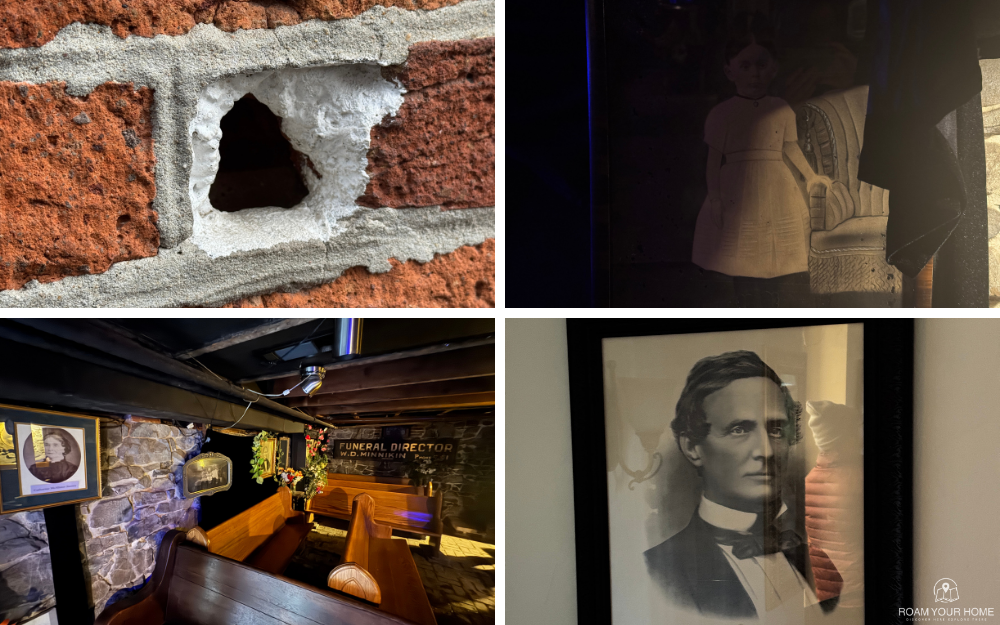
Farnsworth House: A Ghost Tour and Stay
Over time, stories of unexplained sounds, apparitions, and strange occurrences became part of the house’s legend, earning a reputation as one of the most haunted places in Gettysburg.
I toured and stayed the night at the Farnsworth House Inn during a frigid winter weekend of exploring the battlefield. I have to say, it was worth every penny for a truly immersive historical experience.
Taking a Ghost Tour
The first thing I did when I arrived at the inn after checking in was join a ghost tour of the property. The tour began in the nearby bookstore. About a dozen or so people were participating.
The tour guide was a very petite but extremely animated elderly woman. She wore a long black dress and a straw hat, with straight gray hair peeking out from beneath.
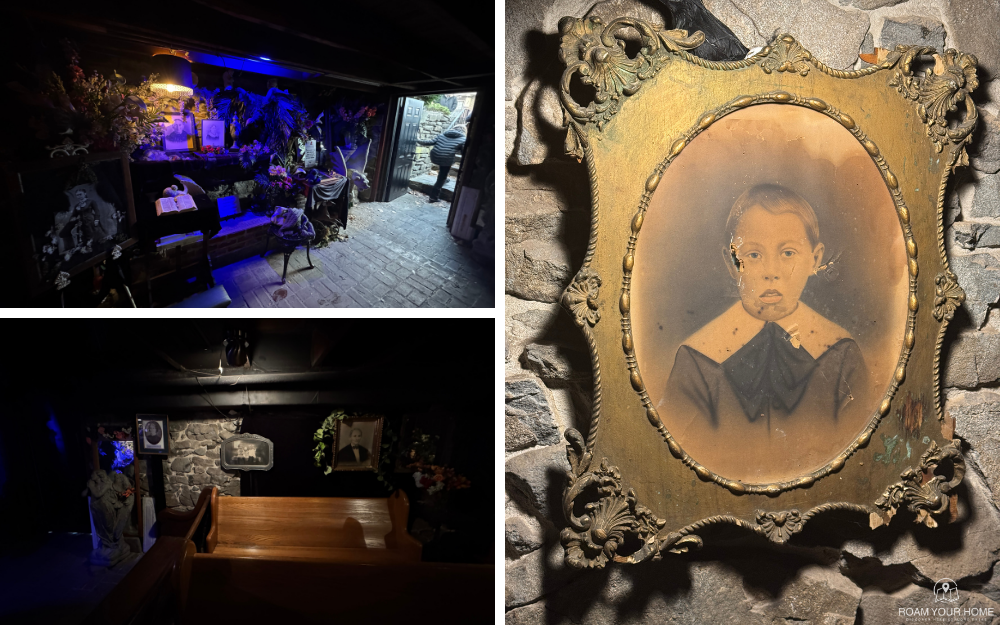
The Cellar
After a brief introduction to the building’s history, she led the group into the dark cellar, which was furnished with wooden benches. The ambiance in the room was what I’ve guessed from a ghost tour. It was dimly lit throughout—old historical photos on a dusty black light backlit walls made it feel a bit eerie. One picture of a young child was particularly creepy-looking. A sign for a funeral home and an Edgar Allan Poe quote on the wall certainly added to the motif. It was clear the room was carefully decorated to look the part.
Once everyone was seated, our guide began telling a story. She explained that during the Battle of Gettysburg, a family of five adults and eight children crammed into this very attic during the three days of fighting. The first floor directly above us was used as a field hospital the entire. For days, the family sat in the damp basement with blood perpetually dripping through the floorboard onto them.
When the fighting was over and the family was able to leave the cellar, their house was hardly recognizable. It was saturated with the blood of dead and dying soldiers. A nearby neighbor and nurse named Mary came to the family’s aid and spent days helping them care for the injured and wash the evidence of agony from the home.
“Mary is one of 16 documented spirits that live in the Farnsworth House. Each one has a name, personality, and a story.” The guide told us and went on. “Mary is my favorite. She was a nurse often described as a calm, even comforting, spirit in the home. Much nicer than soldiers.”
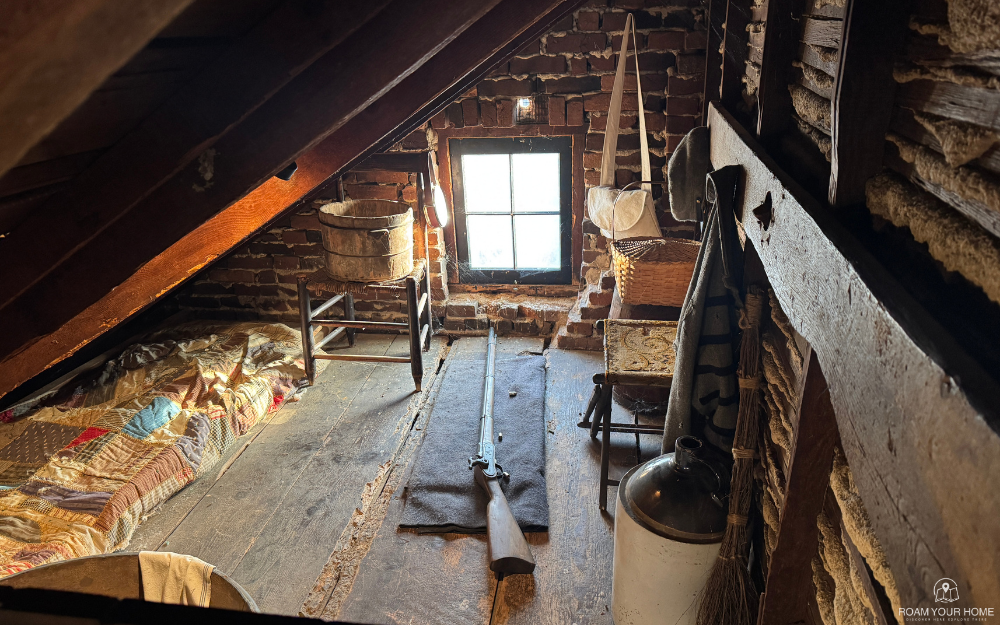
The Attic
As her story wrapped up, the tour group climbed several steep sets of stairs to the attic. After we were seated, the guide explained that this was where Confederate Sharpshooters positioned themselves to shoot at Union soldiers. A small section facing Cemetery Ridge was blocked off. It was decorated to look like it may have looked when sharpshooters lay there.
The attic was also a little museum. There were small glass-encased exhibits filled with relics from the battle. Guns, bullets, cannon rounds, bayonets, and more were packed in for viewing.
While our guide gave some history of the home, I kept waiting to see or feel the presence of Confederate ghosts, which are said to be most present in that attic. No luck that day, but still fun.
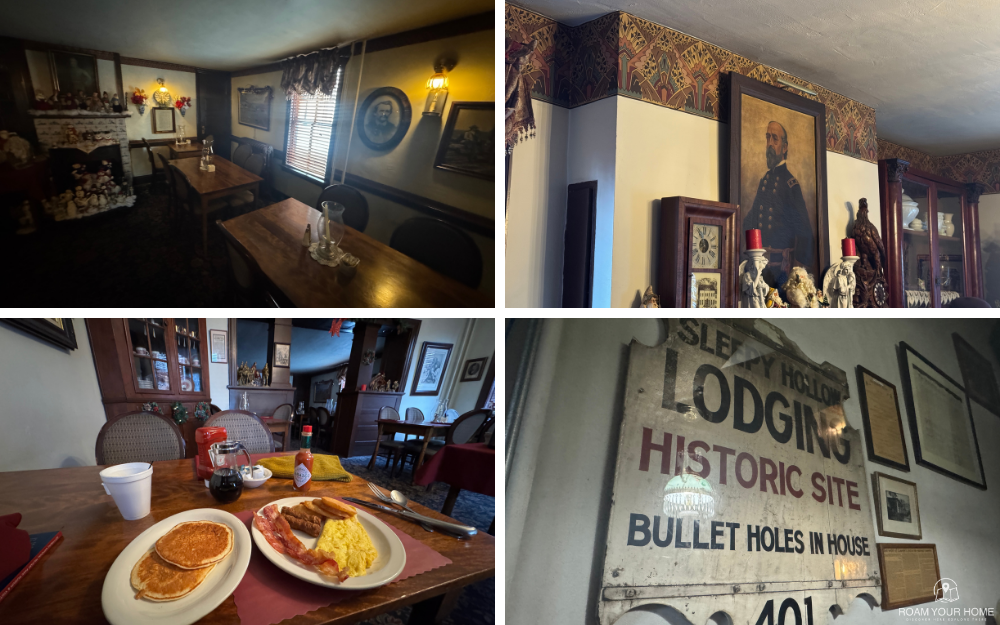
The Dining Room
The tour wrapped up in the Lincoln and Mead dining rooms. Here, our guide continued to share accounts of the battle, the soldiers who occupied the house, and the paranormal encounters reported by staff and guests alike.
Some common things that are heard include footsteps in empty hallways, doors opening and closing on their own, voices, laughter, whispers late at night and sudden drops in temperature.
As he wrapped up the 45-minute tour, she asked. “Is anyone staying the night?” I was the only one to raise my hand, replying, “I am in the Sarah Black Room.” She laughed and said, “That’s the most haunted room! That’s where Jeremy, an 8-year-old boy who was killed in a wagon accident in front of the home, is most often seen.” Witha chuckle, I replied, “Oh really, well, I guess we’ll see if he wants to hang out after supper.”
She went on to explain that he is harmless, but a little mischievous at times.
I enjoyed the tour experience. It blended documented history with firsthand accounts, making it both educational and a bit chilling.